Banpei.net

Remembering Japanese cars from the past

Page 263 of 318

Kei Bosozoku cars: Mitsubishi Minica

We posted this sixth generation Mitsubishi Minica kei car some time ago in the exhaust of the week:

Bosozoku styled kei car: Mitsubishi Minica

It remains one of my favorite bosozoku styled kei cars! It is everything its bigger brothers have: multiple wild long exhaust pipes, granchan invluences, deep dish wheels, huge wings, sharknose and of course an oil cooler to complete it!
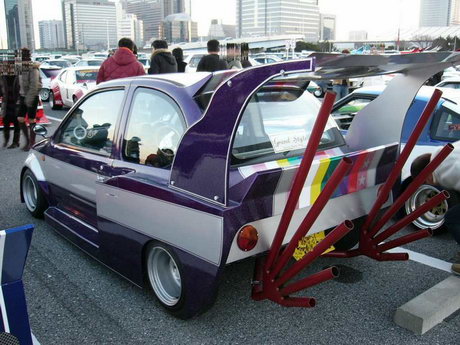
Bosozoku styled Mitsubishi Minica with five fingers exhaust

If you look at the interior you can spot a tsurikawa, mini steering wheel and long gearshifter like any bosozoku styled car should have!
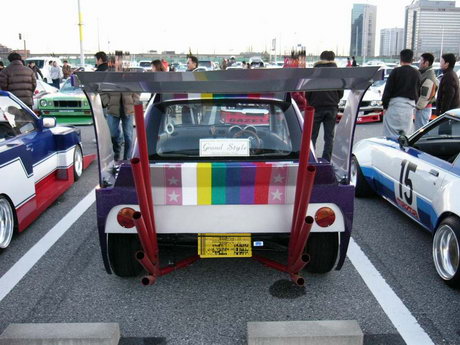
Bosozoku styled Mitsubishi Minica with five fingers exhaust

It took me a while to identify this car: as you can see it doesn’t resemble much of its origin anymore:
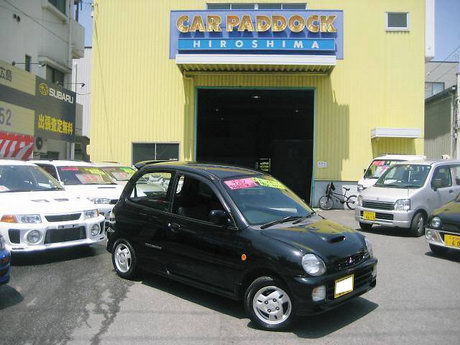
Factory stock Mitsubishi Minica SR-Z

The Mitsubishi Minica is a long living platform: Shin Mitsubishi Heavy-Industries started production of the first Minica in 1962 as a 2 door sedan, while the Minicab was its counterpart as a kei truck. Both were based upon the 360 launched in 1961.
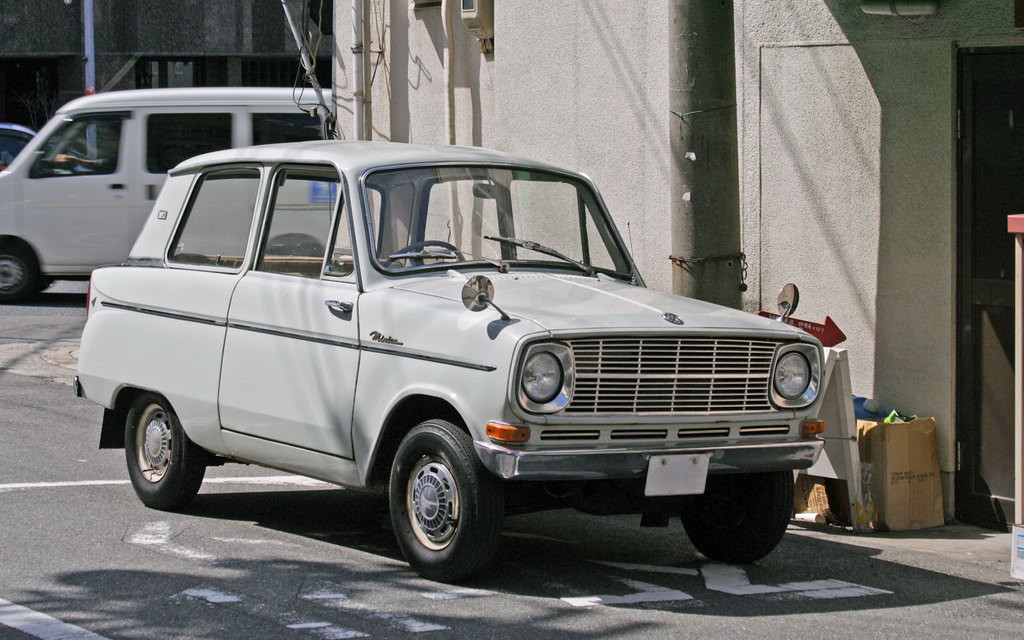
First Shin Mitsubishi Heavy-Industries Minica

The sixth generation was launched in September 1993 to succeed the successful fifth generation. In styling it was a big step forward: it followed the early 90s round and bulgy styling like we are used to from the Mazda Revue/121 and the Mazda Xedos 6. Just like its predecessor it also had the Minica Toppo as a mini MPV variant. In 1997 the restyled Town Bee was introduced alongside the normal Minica. The Town Bee was a retro styled car, a bit like the Nissan Figaro and the Daihatsu Mira Gino.
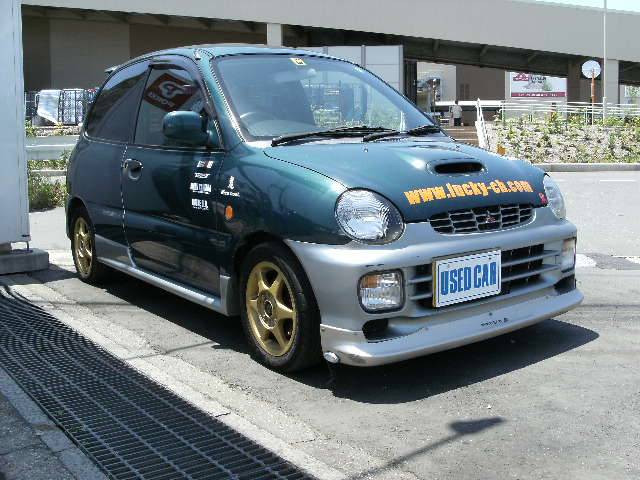
Tuned Mitsubishi Minica Dangan 4

The fifth generation already introduced the world’s first mass produced 5 valve engine with the 3G83 and 3G83T Turbo. This engine was not transferred to the sixth generation but improved into the 4 cylinder 4A30. This meant a big improvement in torque for the NA variants: it increased with almost 10% at 700rpm lower than the 3G83! The turbo version remained the same in specifications, however that variant was actually a leashed engine and could easily be unleashed with some minor upgrades. In stock form it already produces almost 100bhp per litre! Imagine the potential of that engine!
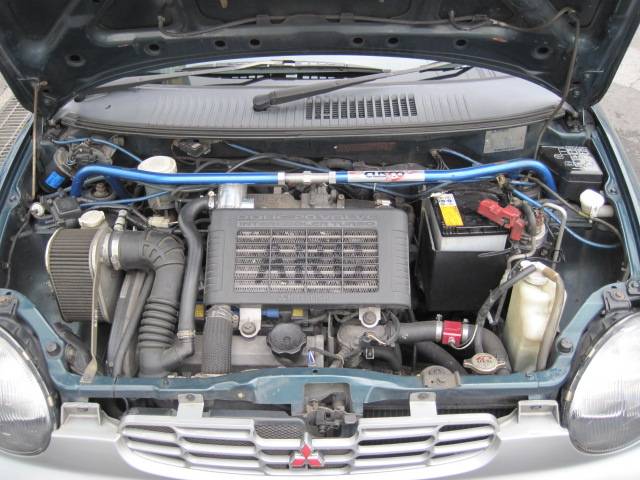
Tuned Mitsubishi Minica Dangan 4

Just like the fifth generation the sixth generation also offered 4WD. The 4WD models were indicated with a 4WD suffix. Apart from the 4WD versions the most desirable versions were the SR-Z and the Dangan 4. Both featured the 4A30T turbo engine and the Dangan featured 4 wheel drive. The Dangan was named after its Dangan ZZ-4 predecessor of the fifth generation and even more impressive: it now features a 4 cylinder engine and improved 4WD.
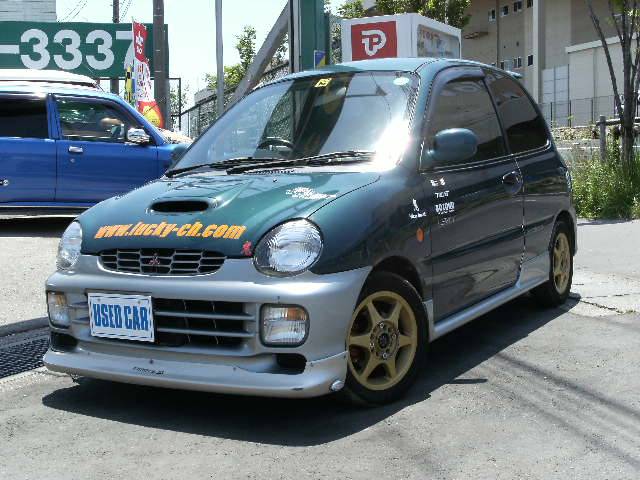
Tuned Mitsubishi Minica Dangan 4

I can imagine why you would convert your kei car into a bosozoku styled car: it is fun, it is cheap and even welding that tiny sharknose is done in only a matter of minutes! I really think the Minica is a great platform to build an bosozoku styled car upon: its 4 cylinder 20 valve engine should give a very nice raspy sound when revving it into its 9000rpm redline!

[ I posted this article earlier this week on Bosozokustyle.com ]
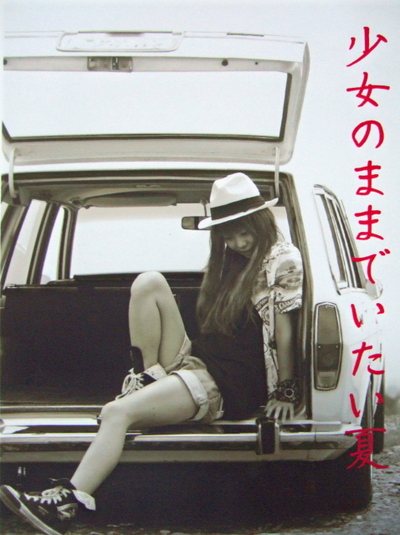
Nissan 510 cuteness

Thanks to Beeoneoneoh I’m following Men of 510‘s blog, which is about…you probably guessed that one: the Nissan Bluebird 510! ;)

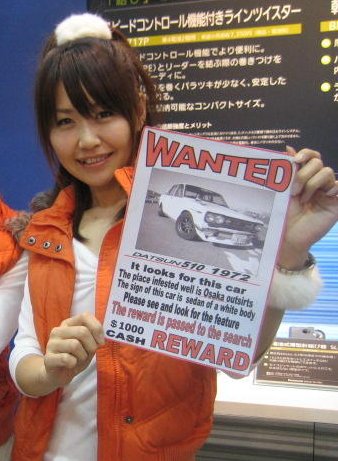
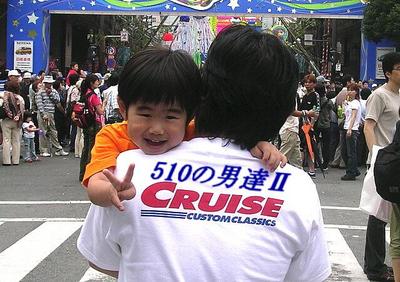
Apart from a lot of manly 510 pictures they also post cute 510 pictures from time to time:
Cute girl in a Nissan Bluebird 510 van

She wants her 510 back!

Would Oliver ever be as cute as this kid?

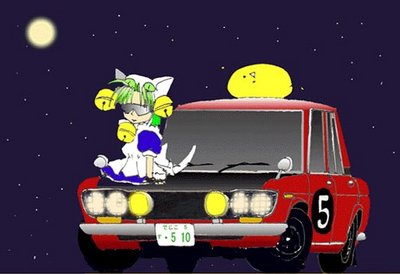
And the last one is all about Digi Charat:
Dejiko and Gema from Digi Charat love the 510 as well!

No way the Toyota Carina can compete with that amount of cuteness! Anyone want to trade a white Carina TA60 for a Bluebird 510 with me?

Rice paddy crop art

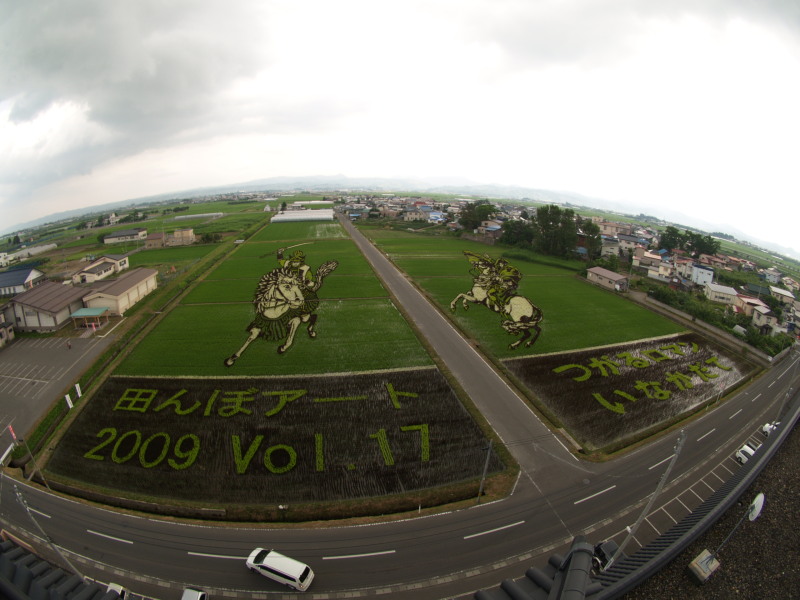
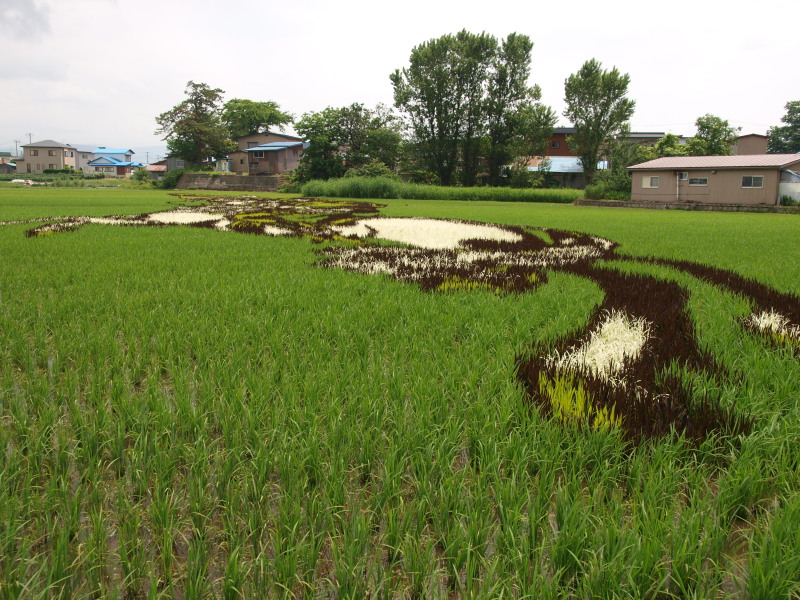
I found this picture of rice paddy crop art on Pink Tentacle’s blog:
Is this minivan really drifting?

I wasn’t really looking at the rice paddy crop art: I was immediately looking at the minivan! First few seconds I thought it was drifting! :D

Of course it is an optical illusion: the wide angle lens makes the straight road at the bottom shaped like a bend and the minivan is actually reverse parking at the bottom of the picture!

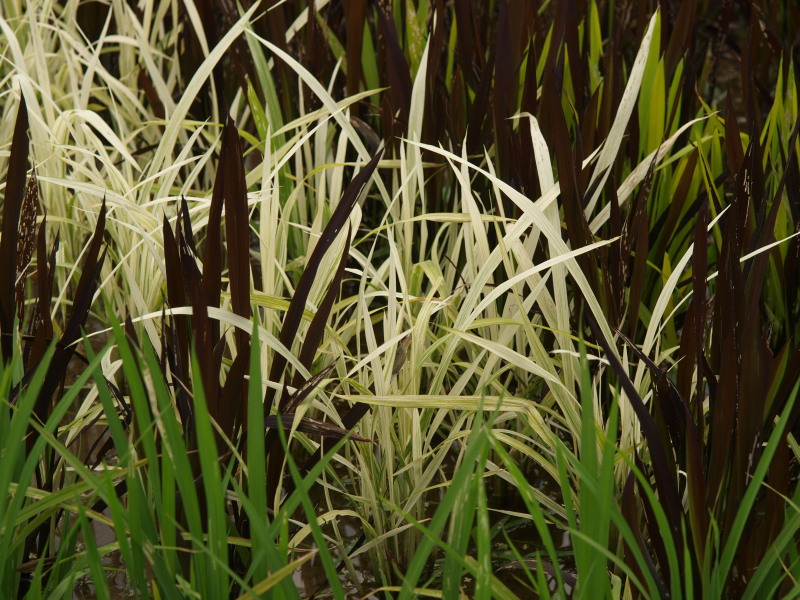
Rice paddy crop art: plant different colored rice plants in a pattern

Rice paddy crop art: plant different colored rice plants in a pattern

About the rice paddy crop art, it is nothing more than planting differently colored rice plants and wait for the result to grow. It is the same as we do in Holland with the tulip bulbs. ;)

X-mas comes early this year!

Yesterday when I entered the office a nice big X-mas box (seriously!) was waiting for me and later that day another enormous box arrived at the office. I opened both of them yesterday evening.

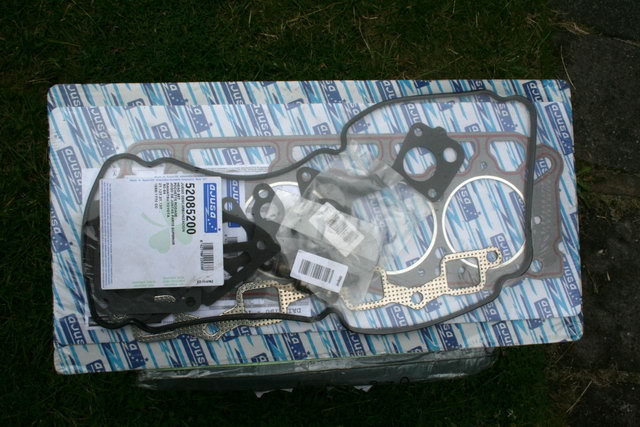
The enormous box contained a 2T/3T gasket set:
2T/3T gasket set
2T/3T gasket set

I found this cheap set for as much as two of the inlet gaskets! IMO you can never have too much gaskets! :)

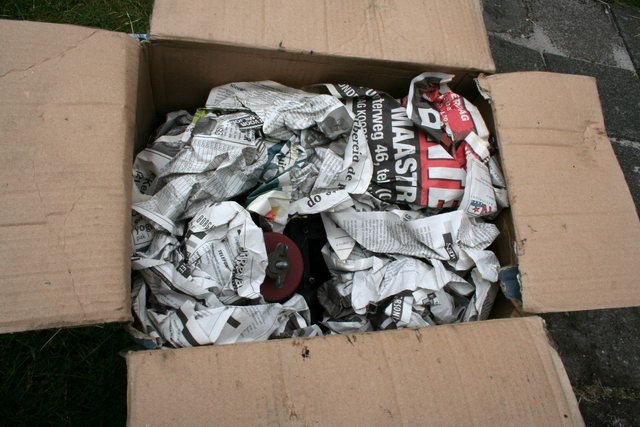
But what was in the X-mas box then?
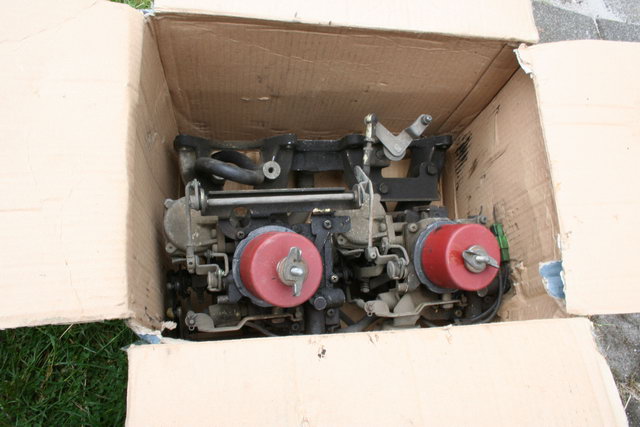
What is in this box?

You probably can guess that one already:
2T-B double carburetor set from a 1983 Toyota Celica

It is a 2T-B carburetor set! Giving an instant upgrade of 11HP on my 2T engine! That is almost an increase of 15% in horsepower! :)

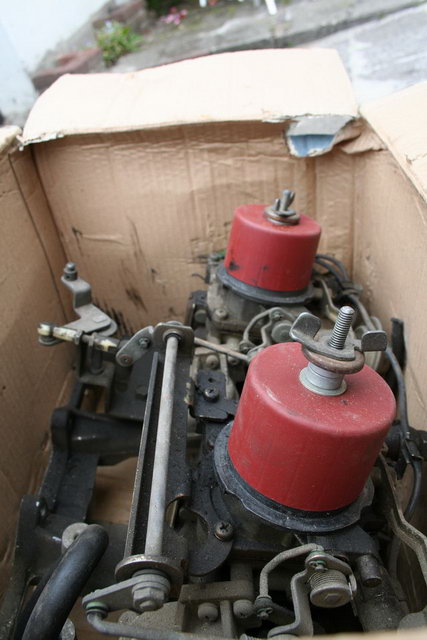
2T-B double carburetor set from the side

And from the side it looks even better! :)

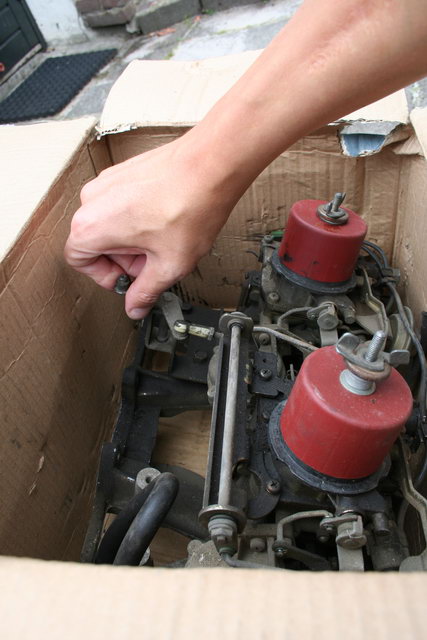
Remember last weeks posting with the webers??
Vroom! Vroom! Vrooom! Vrooooooom!

:D :D

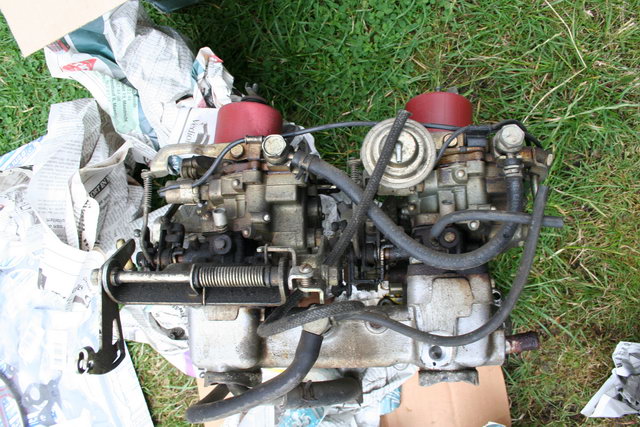
2T-B carburetor set from another side

So, what’s next? Well, I still need an air filter to complete the set. Whenever I find an original 2T-B air filter or an open air filter I will start installing this on the Carina! :)

Japanese grand prix 1969

Half a year ago I posted links to two videos which showed the first Japanese Grand Prix in 1963. The same person posted part 2 today of this series: the Japanese Grand Prix of 1969! :)

Unfortunately the videos can’t be embedded, so my story and pictures will have to compensate that. At the bottom of this article I placed the links to the videos!

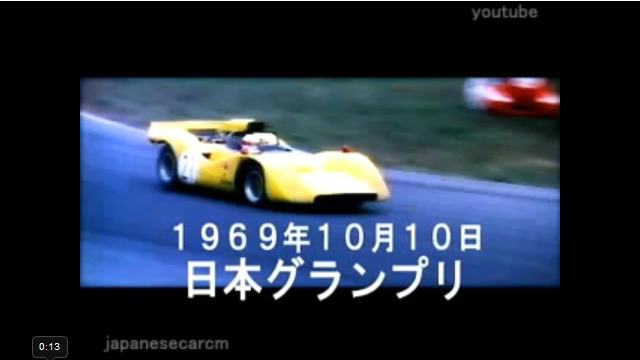
Japanese Grand Prix of 1969 held on the 10th of October 1969

This time it only consists of the GP race itself, so no 1969 saloons and no early C10s racing in these videos…

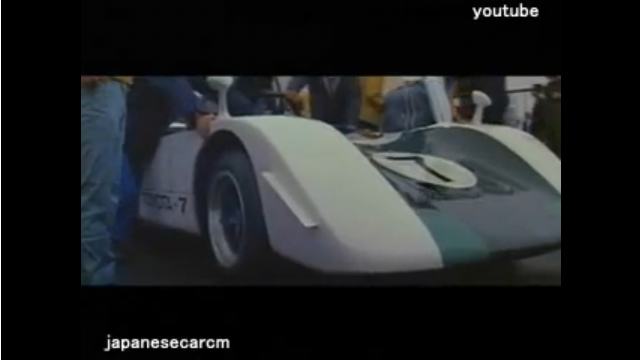
The new and improved Toyota 7 on the 1969 Japanese Grand Prix

This was one of the most notable races in the history of the Japanese Grand Prix. In 1968 Toyota had tried to race with the brand new Toyota 7 in the Group 7 race and they failed: they ended up behind Nissan’s R381 and the Porsche 907 due to technical problems. In 1969 they were back with the improved Toyota 7: new aerodynamics and a new intake and exhaust system!

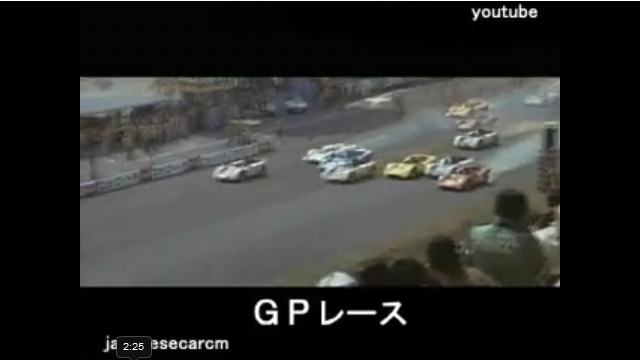
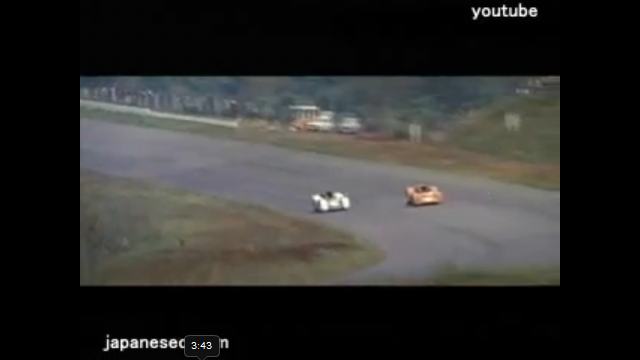
Start of the 1969 Japanese Grand Prix

But Nissan and Porsche did also improve their cars: Nissan had the Prince GRX3 V12 powered R382 ready for the Japanese Grand Prix. This marked the final between the Prince and Nissan merger. Also Porsche attended with the new 917 featuring a 4.5 liter 12 cylinder boxer. The Toyota 7s had a very good start and passed the Nissans at the start, but so did the Porsche 917!

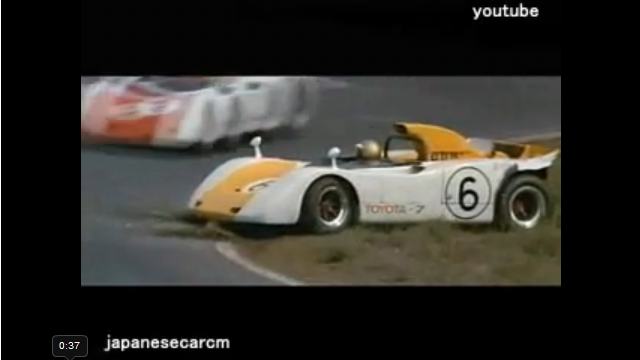
The Porsche proved not to be any competition at all: they were very powerful but lacked stability in tight corners and reliability. Also one by one the Toyota 7s were losing ground to the mighty Nissan R382 and incidents like this one did not help either:
Toyota 7 in trouble after evading a 917

And finally the Nissan R382 number 20 driven by Motoharu Kurosawa was able to pass the leading Toyota 7:
Toyota 7 getting passed by the number 20 R382 driven by Motoharu Kurosawa

In the end the Toyota 7 finished 3rd after Motoharu Kurosawa’s winning R382 and the second R382 driven by Yoshikazu Sunaku.
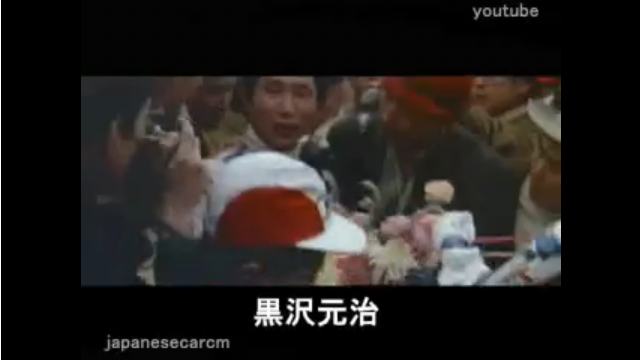
Motoharu Kurosawa winning the 1969 Japanese Grand Prix

Motoharu Kurosawa winning the Japanese Grand Prix of 1969 marked Kurosawa’s final breakthrough and Kurosawa became one of Nissan’s primary drivers.

The videos feature Jazz as background music. It really feels late 60s with those jazzy tunes in the background and somehow it really fits it well! Perhaps Jazz was the Eurobeat of the 60s?

You can find both videos of the Japanese Grand Prix 1969 here:
[ The Japanese Grand Prix 1969 part 1 ]
[ The Japanese Grand Prix 1969 part 2 ]

« Older posts Newer posts »

© 2026 Banpei.net

Theme by Anders NorenUp ↑