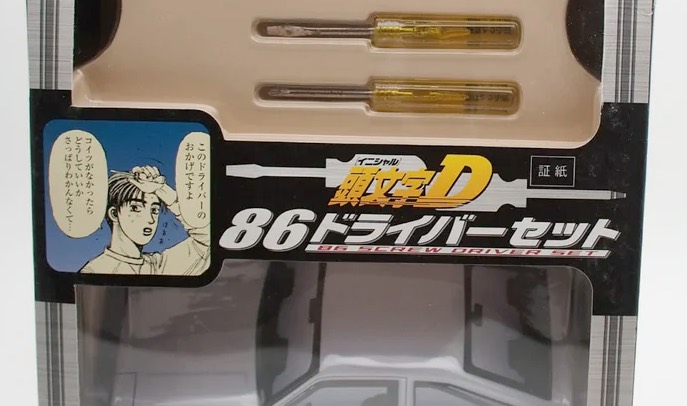
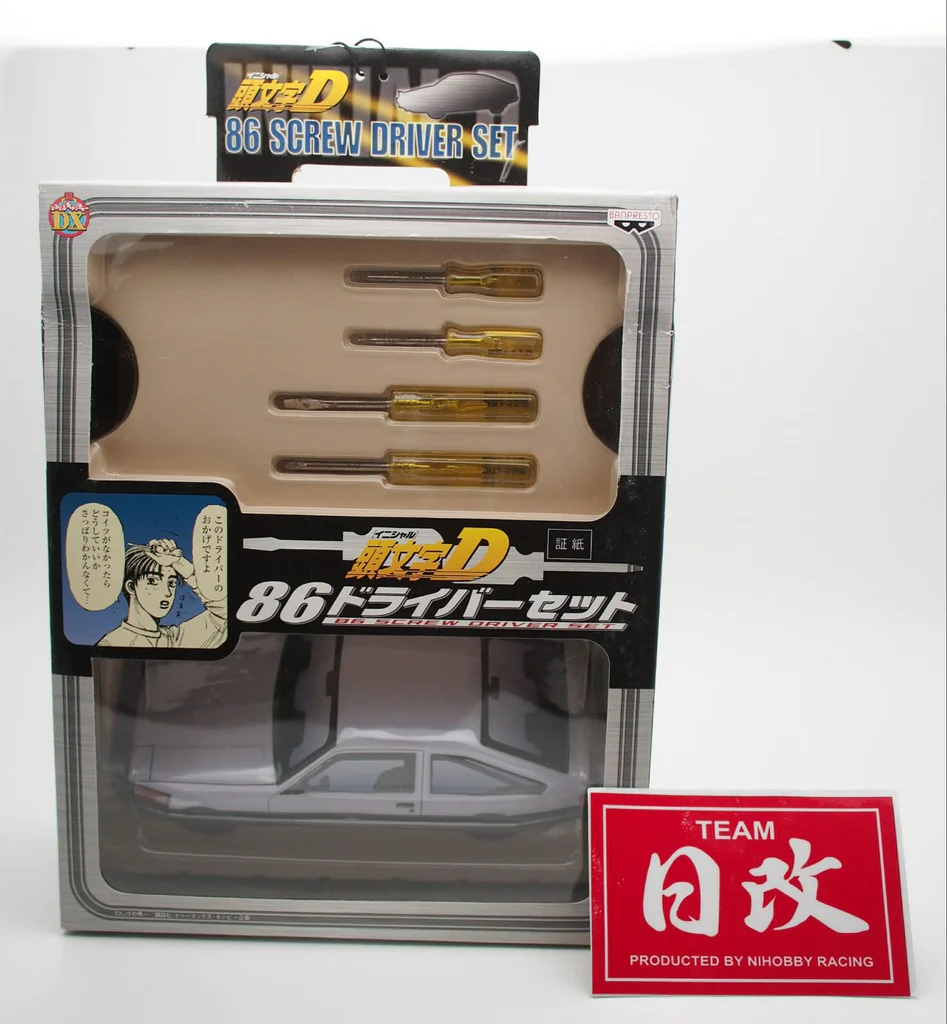
When I saw the packaging of these Trueno AE86 screwdrivers my first thought was that it was a set of 86 screwdrivers. You know, like all those other 80-piece screwdriver set or 100-piece drill attachment set. The 86 in the name obviously refers to the AE86, so it’s a set of 4. Four screwdrivers for 64 dollars? That’s insane! Are these made of platinum? Or perhaps made of recycled boro Trueno AE86 drift missile body panels?
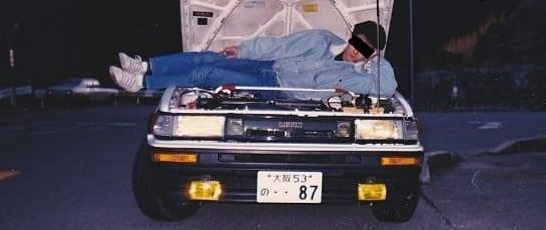
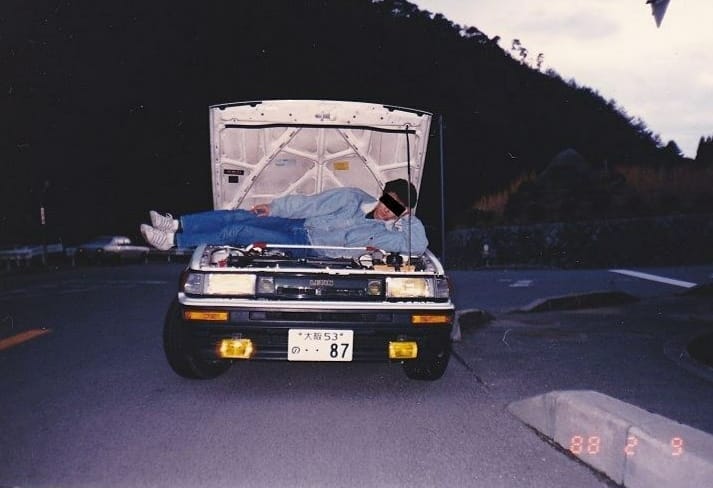
What is the most comfortable place of your Levin AE86? What’s the best intake on your Levin AE86? Flat out in your engine bay of course!
Sorry for these bad puns, but I just had to make them!
Kouki AE86 is one up 87 in 1988!
License plate
This nearly brand new kouki (facelift) AE86 from Osaka is one up with its 87 license plate in February 1988! Now the big mystery is whether it’s a 1987 car or that the 87 license plate is a coincidence. Next to the license plate, it has got a double set of fog lights: über rare OEM GT Apex fog lights in the grill and two Cibié 35 / Airport.
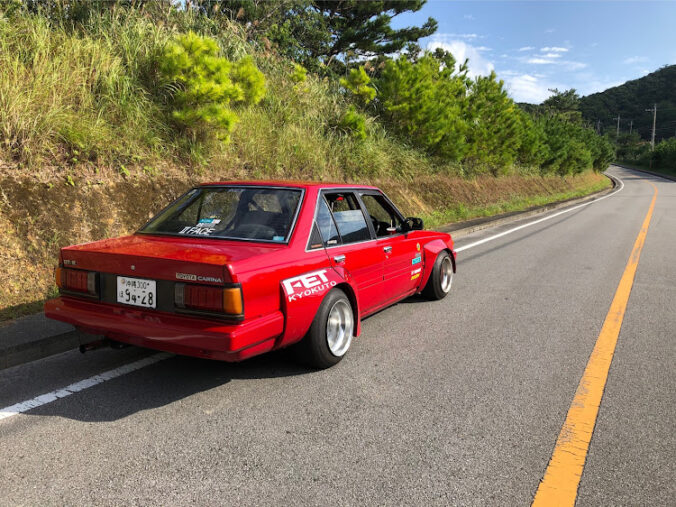
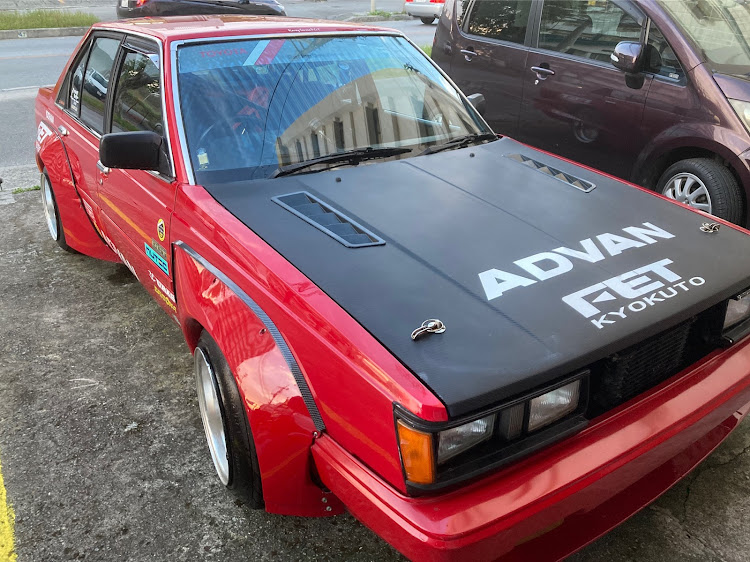
Fender flares will give you the ability for a much wider track than with your standard OEM fenders. Fender flares range from the simple bolt-on types as introduced on the Hakosuka Skyline to the bizarre wide creations of the Group 5 and N2 racing. Zokusha were copying racing designs, hence a lot of the zokusha have giant wide fender flares. I found this Toyota Carina GT-R AA63 from Okinawa on Cartune and it actually featured both N2 and zokusha fender flares. So my question to you: N2 or zokusha fender flares?
N2 style
I’ll first start with the N2 Style (not to be confused with the N-style) fender flares:
Toyota Carina GT-R AA63 with N2 fender flares
The N2 used to be a one-make racing series in the 1980s and early 1990s where it was based upon the FIA Group N rules. In Japan, the Group N was already driven as the N1 series which later became the Super Taikyu Series. N2 started out as a racing series organized by Toyota to have the Toyota Corolla Levin AE86 and Toyota Sprinter Trueno AE86 compete against each other. Keiichi Tsuchiya, who just graduated from the Fuji Freshman series, wanted to join the series but was denied entry because he wasn’t an established driver yet.
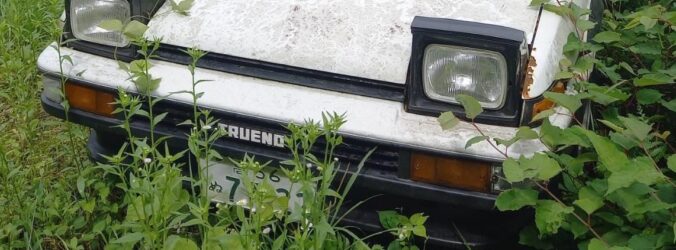
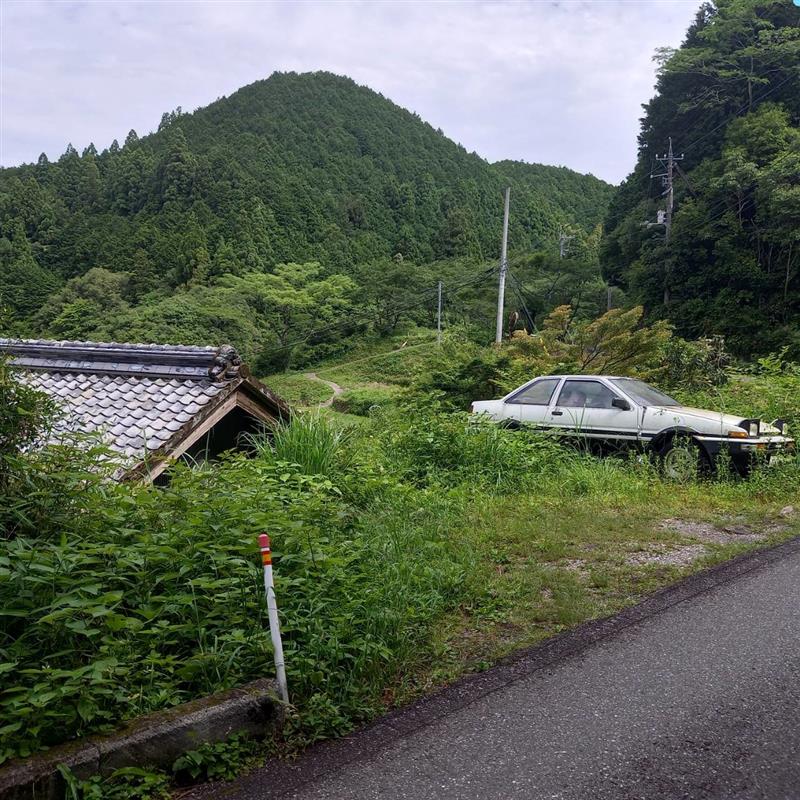
It is always sad to see a forgotten or neglected car. It’s bad if the car in question is parked up for a long time and is showing signs of rust and decay. It’s even worse if the car is slowly being consumed by the foliage around it. This two-door Toyota Sprinter Trueno AE86 is one such car!
Abandoned rusty two-door Sprinter Trueno AE86
Eaten by the foliage
The Minkara user mitanimomo investigated this neglected Trueno left behind in the fields. The owner could not be traced and, just like the car, the house next to it was abandoned.
The Trueno appears to be original panda, which would indicate it’s a GT Apex model. The doily lace covers are still on the seats. And it seems to be sitting on Work Equip Casting 4 spoke rims.
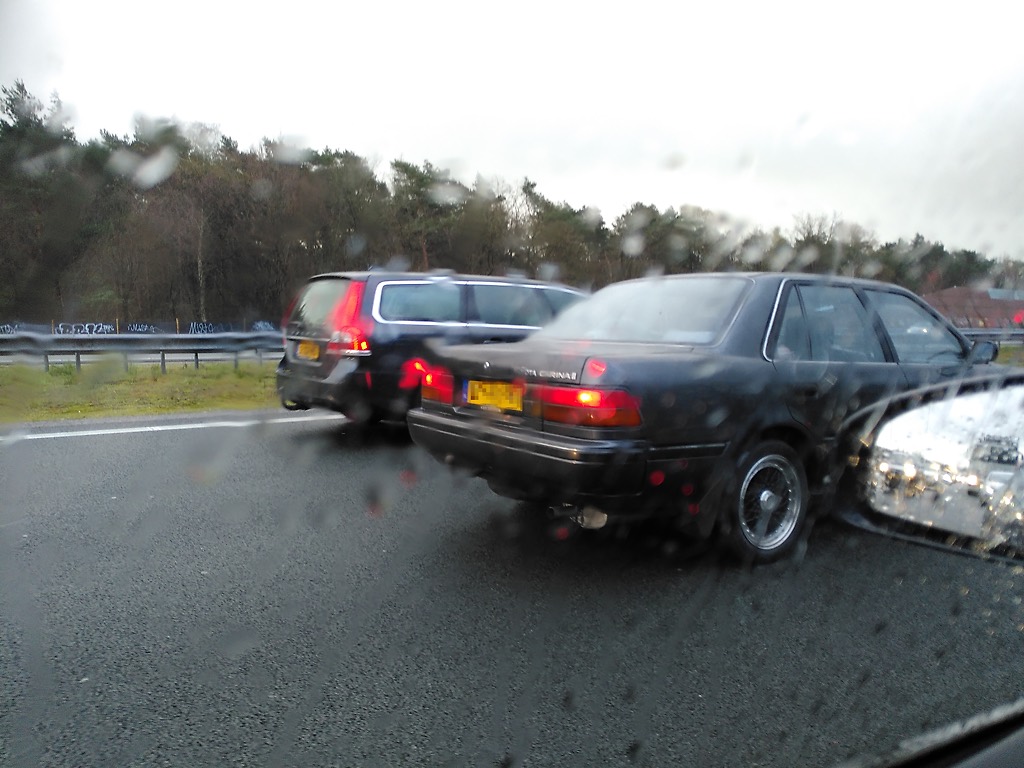
Earlier this year I had a job that required me to commute by car every day. Even though it was normally only a 17-minute drive, it meant I was stuck in a traffic jam every day. One day I noticed an interesting car in my rearview mirror and I immediately took my phone out of my pocket. As it passed by in the other lane, I could enjoy this fusion 1992 Toyota Carina II AT171 very much!
Toyota Carina AT171 in a traffic jam
What’s the (con)fusion?
If you’re wondering why I call it a fusion car, that’s simply because it is half-JDM inspired and half-German inspired. In my rearview mirror, I could see the headlights were replaced by yellow bulbs. The yellow headlamps are actually a French thing and I did a video about yellow headlights that a long time ago. Lately, the VW and BMW scenes adopted the yellow headlamps as well as a cool retro thing. So if this Carina has yellow headlamps, it’s definitely not JDM but French.
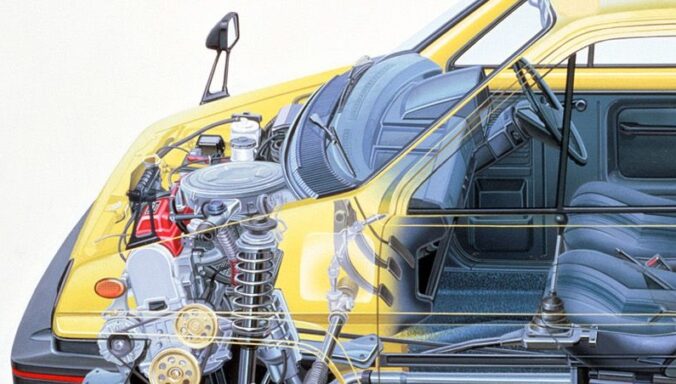
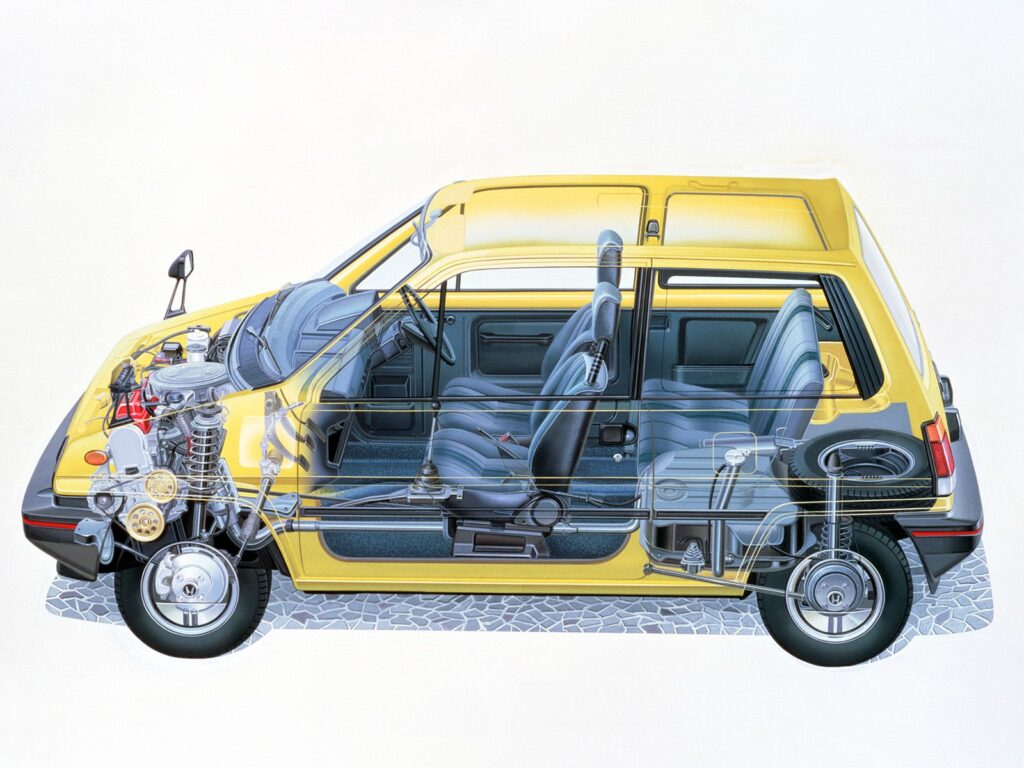
This week I already posted twice about the Honda City, so why not stick to it for the picture of the week post? Today we will look at a dissected Tall Boy: the Honda City! For those unaware: Honda nicknamed the Honda City the Tall Boy. They did so because of the relatively high profile of the car, giving it a lot of space.
Honda City was nicknamed the Tall Boy
The Honda designers created the tall CITY logo to support the tallness of the car. The Honda leadership liked it so much that they retained this. That’s also the reason why all sorts of tall and city puns, like the Manhattan HiFi, were created. It’s a shame no Motocompo can be found in this cutaway drawing.
This website uses cookies to improve your experience. We'll assume you're ok with this, but you can opt-out if you wish.AcceptRead More
Privacy & Cookies Policy
Privacy Overview
This website uses cookies to improve your experience while you navigate through the website. Out of these, the cookies that are categorized as necessary are stored on your browser as they are essential for the working of basic functionalities of the website. We also use third-party cookies that help us analyze and understand how you use this website. These cookies will be stored in your browser only with your consent. You also have the option to opt-out of these cookies. But opting out of some of these cookies may affect your browsing experience.
Necessary cookies are absolutely essential for the website to function properly. This category only includes cookies that ensures basic functionalities and security features of the website. These cookies do not store any personal information.
Any cookies that may not be particularly necessary for the website to function and is used specifically to collect user personal data via analytics, ads, other embedded contents are termed as non-necessary cookies. It is mandatory to procure user consent prior to running these cookies on your website.