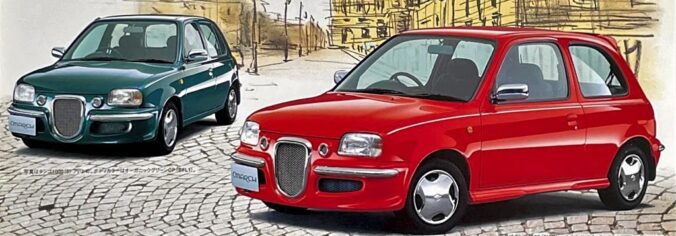
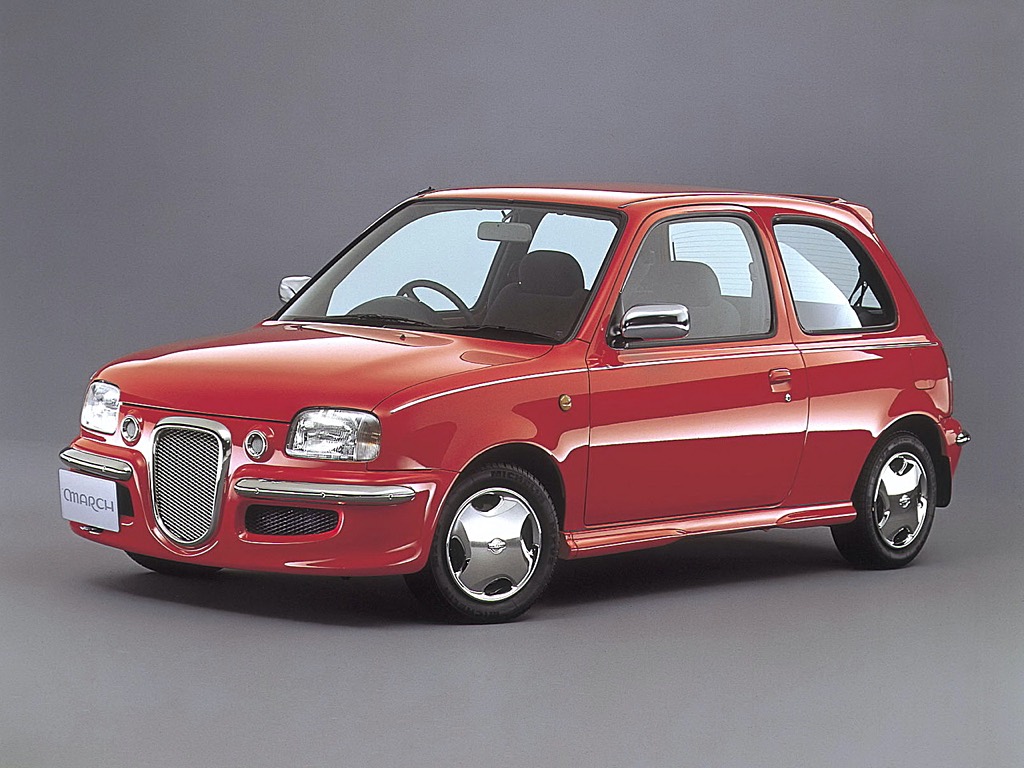
Yesterday I already briefly touched upon the Nissan March Tango’s history. As I concluded, there were so many Nissan March K11 variants that it deserves its own series to highlight each and every one of them. Today we’ll kick off this series with the March Tango simply because I already covered it yesterday.
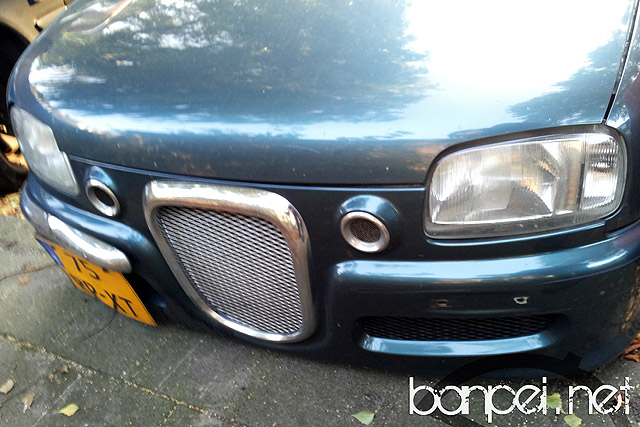
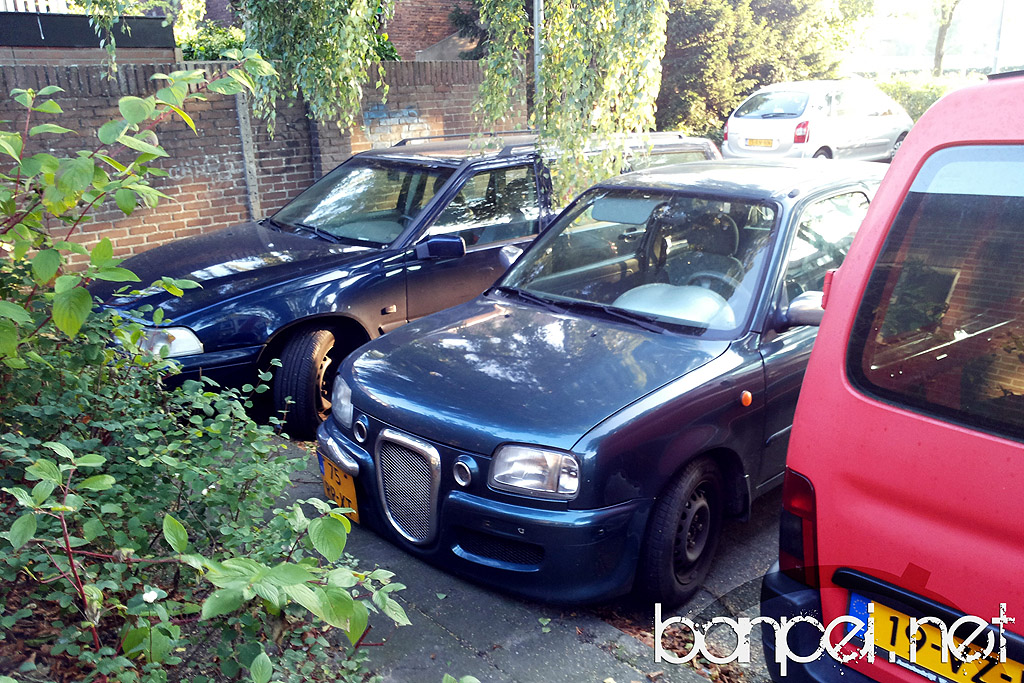
Apparently, ten years ago I was wrong about a particular Nissan Micra I found parked down on the street. Very wrong. The Micra in question featured a retro-styled front end and I thought, back then, it was some bodykit for the March in Japan.
Apparently, it is a Nissan March Tango produced by Autech in 1996 and 1997! So how did I manage to finally identify this front end after 10 years? And what’s the Autech March Tango? Are there others as well? I’ll try to answer all these questions today but a follow up has to come soon!
Connecting the dots
When I was on a voice call with my friend in Japan Daniel O’Grady (Wasabi Cars) talking about his awesome Mitsuoka Ray, I briefly mentioned encountering this car over ten years ago. He asked me to send him a picture, which I did. Modern life is so convenient: While talking to each other over WhatsApp, I was able to search my blog, find the post in question and send the photos. When Daniel saw the Micra in question he told me it was a Tango, a March Tango. Boom! Mind blown!
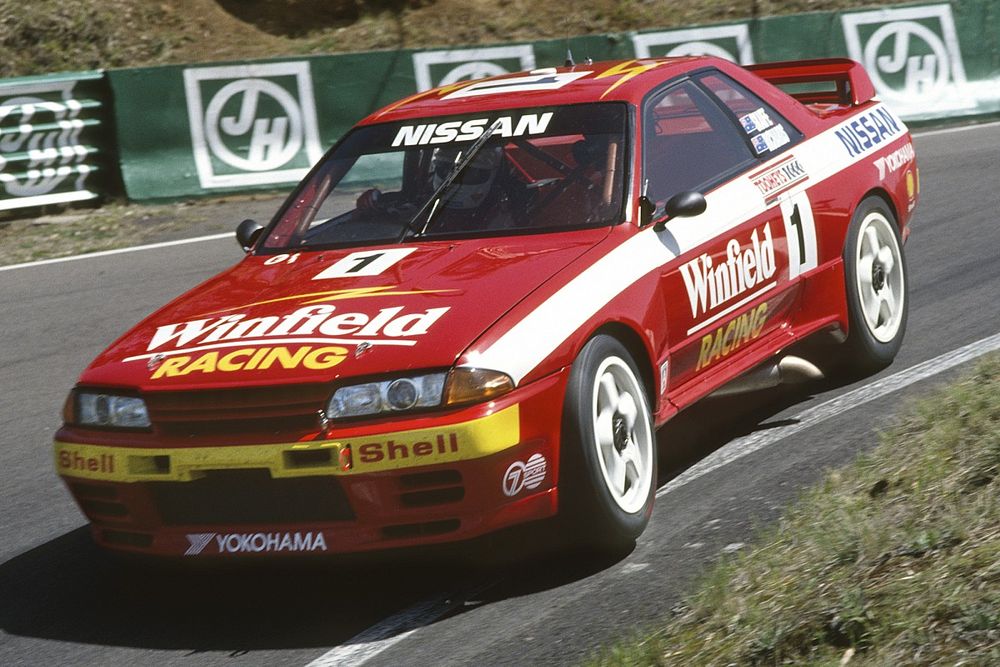
Aiden Millward has done a ton of videos about racing and I love his storytime videos. It harks back to those good old days and Aiden can tell these stories with that little extra cherry on top. Most of his storytime videos are about Formula One or Le Mans 24 Hours as those are the most covered motorsport in this world. However, earlier this week, I was pleased to see him covering the story of Godzilla. The R32. How it earned its name. How it outclassed everything else.
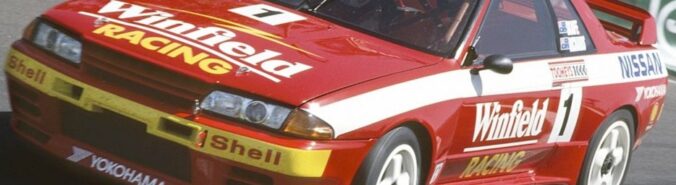
Godzilla R32 at its finest hour at the 1992 Bathurst race
Not to spoil too much of this story, but the Nissan Skyline R32 didn’t earn its nickname in Japan. It earned this name in the Australian Touring Car Championship (ATTC) over the period of 1989-1992 when it dominated the Supercars (group A) racing series.
Earlier this week, I posted a Toyota Estima L Aeras G Limited ACR30 in Down on the Street. Today I will feature the non-JDM sister car the Toyota Previa in Picture of the Week. As it involves the first and second generations, I should have named that Pictures of the Week.
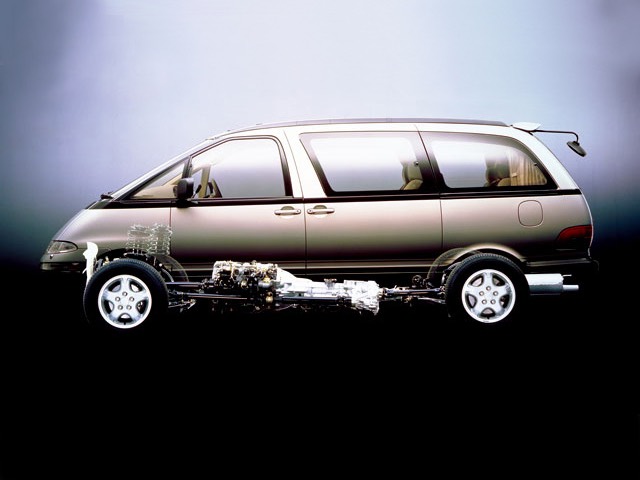
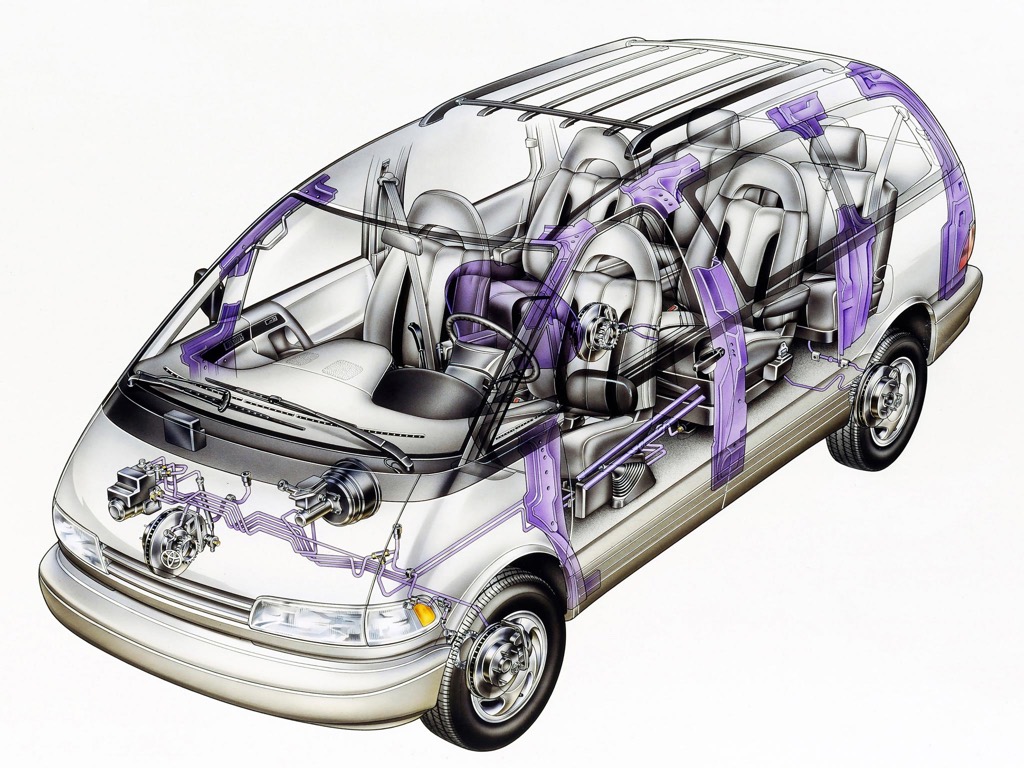
It’s funny how much you can actually observe from a cutaway drawing. Last week I already posted my amazement over the Galant GTO’s rear leaf springs. In the cutaway drawing of the Previa, I was also able to deduce a lot of things!
Cutaway drawing of the first generation Toyota Previa TCR20L
The first cutaway drawing above depicts the first-generation Previa. I’ve narrowed it down to a TCR20L as it is a seven-seater (eight-seater has the code TCR10L) and is a left-hand-drive example.
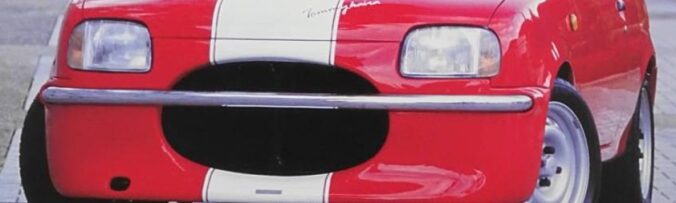
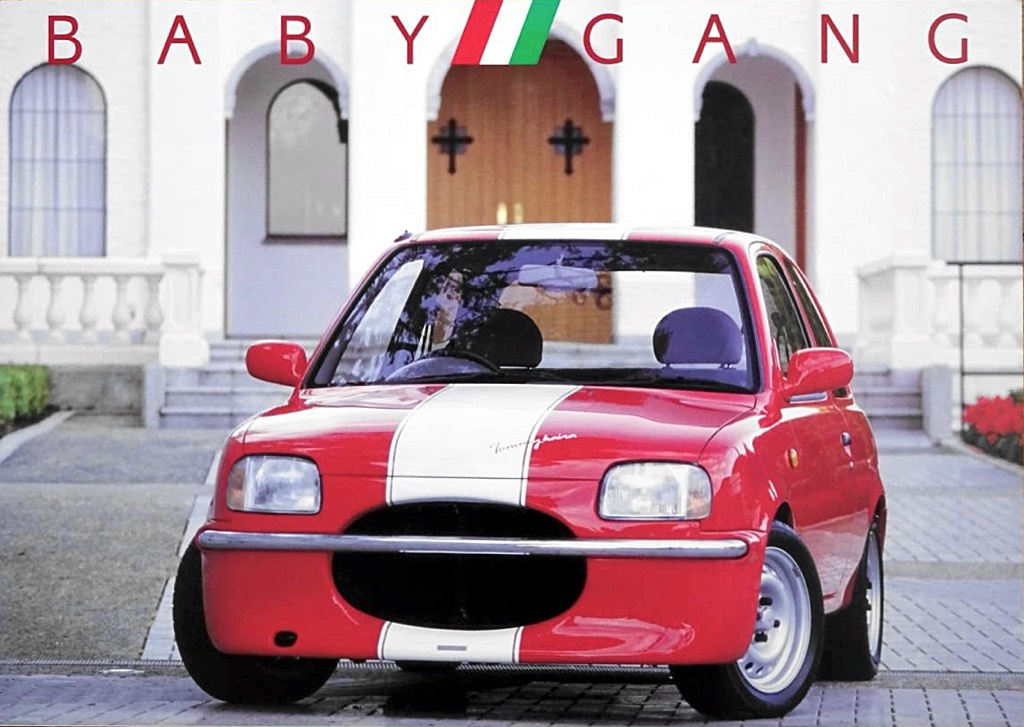
You may wonder what image DALL-E 3 would generate if you described the following picture of the Tommy Kaira M13: big wide gaping mouth and above it the tagline Baby Gangin big bold letters. Personally, I think not much good: either it would just get confused by that mismatch of information or it simply refuses to create something NSFW!
Tommy Kaira M13 brochure: Baby Gang with a Micra K11
This picture brings up even more questions. Why Baby Gang? Why the Italian Flag? Why is such a big gaping hole necessary? I’ll try to make some sense out of this…
The Tommy Kaira M13
The first thing you probably notice is that the Tommy Kaira M13 actually is based on a Nissan March K11. The Nissan March K11 was released in 1992 and Tommy Kaira offered the M13 for the first year in 1993. Remember that the Japanese bubble economy burst in early 1992. The more expensive Tommy Kaira cars must have fallen out of grace quickly and this smaller M13 was an excellent choice!
Versions
As stated earlier, the Tommy Kaira M13 was based on the Nissan Micra K11. After the first M13, it existed for another generation with the Micra K12.
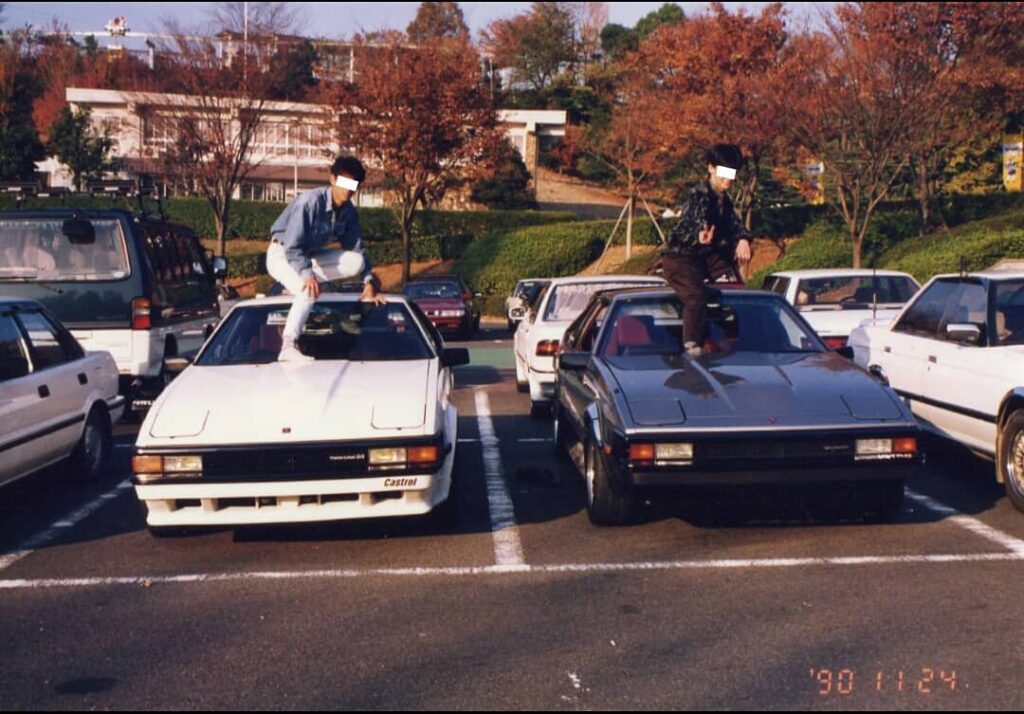
The Lee brothers in the Double Dragon game may have inspired these two to stand on top of their Toyota Celica XX-es in today’s Family Album Treasures. So why are they standing on top of their cars? And what is the Double Dragon game? And what has that got to do with the Celica XX?
Family Album Treasure: Double Dragon Celica XX GA61 and MA63
Double Dragon
Let’s start with the Double Dragon game. If you are unfamiliar with this game, you really missed some vitally important gaming history. Double Dragon was the first game in the beat-’em-up genre. This genre is a side-scrolling game where “bad guys” have to be fought and reach a goal at the end. In this case, a young student, Marian, is being kidnapped by the Black Warriors. You have to fight your way to rescue her from this evil gang of thugs.
This website uses cookies to improve your experience. We'll assume you're ok with this, but you can opt-out if you wish.AcceptRead More
Privacy & Cookies Policy
Privacy Overview
This website uses cookies to improve your experience while you navigate through the website. Out of these, the cookies that are categorized as necessary are stored on your browser as they are essential for the working of basic functionalities of the website. We also use third-party cookies that help us analyze and understand how you use this website. These cookies will be stored in your browser only with your consent. You also have the option to opt-out of these cookies. But opting out of some of these cookies may affect your browsing experience.
Necessary cookies are absolutely essential for the website to function properly. This category only includes cookies that ensures basic functionalities and security features of the website. These cookies do not store any personal information.
Any cookies that may not be particularly necessary for the website to function and is used specifically to collect user personal data via analytics, ads, other embedded contents are termed as non-necessary cookies. It is mandatory to procure user consent prior to running these cookies on your website.