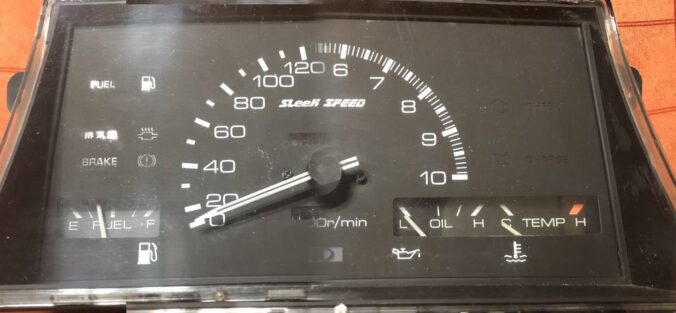
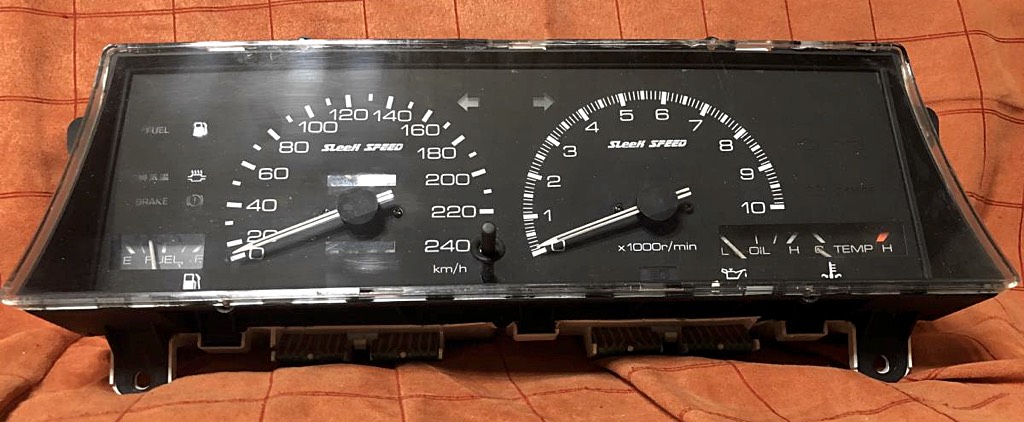
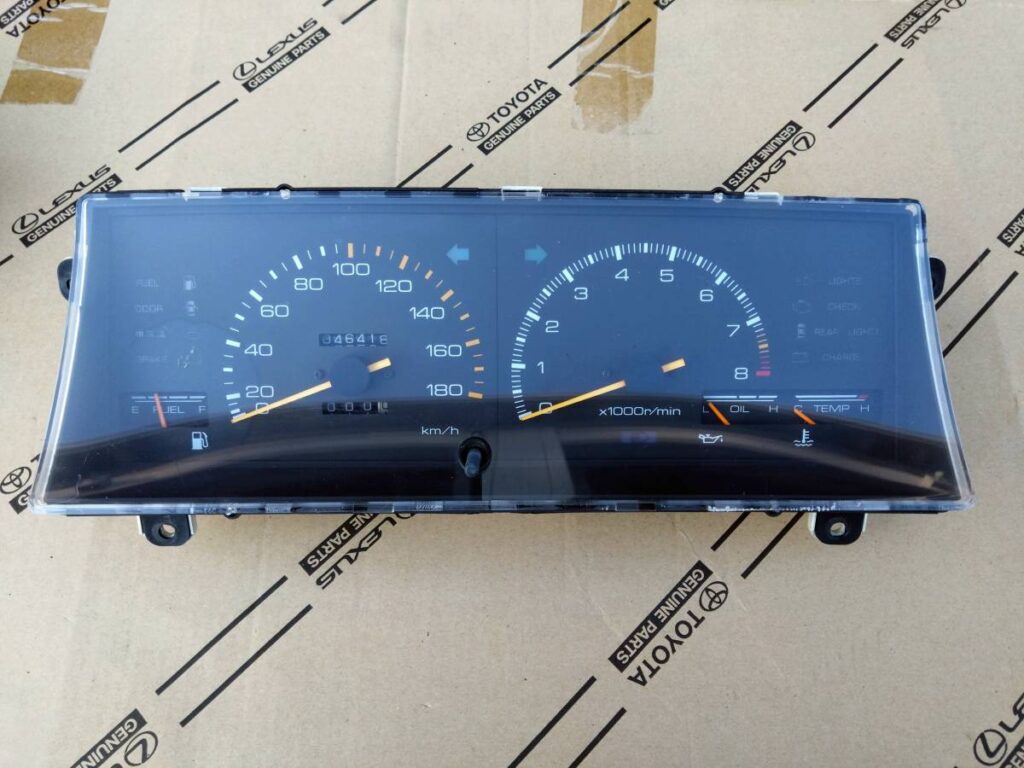
A few weeks ago I found a comment in the comments section of the AE86 gauge cluster trivia page that there was a Sleek Speed AE86 gauge cluster for sale on Yahoo Auctions. Unfortunately, I missed the auction, but fortunately enough the pictures were shared via a drive. I updated the original AE86 Trivia page and didn’t think of it until I spotted the same cluster for sale again!
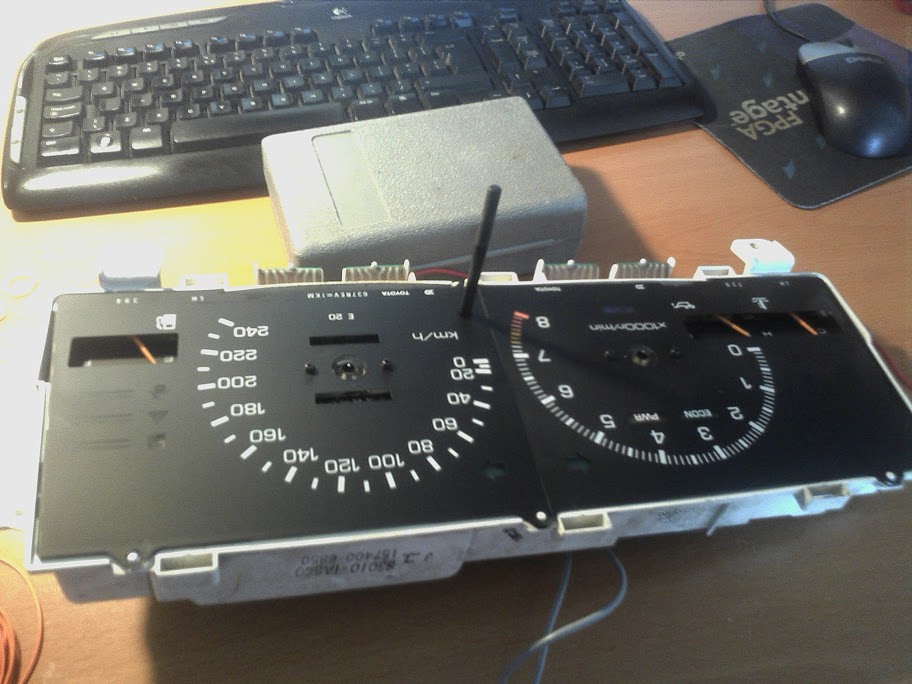
Sleek SPEED AE86 gauge cluster with 240 km/h speedometer and 10K rpm tachometer
The cluster is not for the faint-hearted as it’s for sale for 158,000 yen (just over 1000 dollars), which is steep. Then again, the digital gauge cluster already sets you back well over 300 dollars nowadays and it might be difficult to find another. The cluster is a modified GT or GT-V cluster as it doesn’t feature the door-warning and tail-light burnout warning lamps.
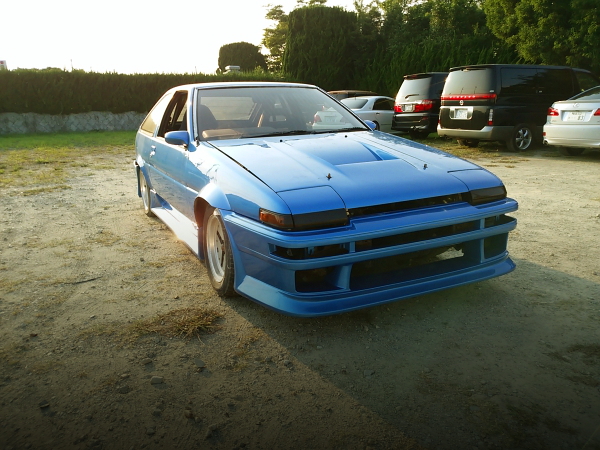
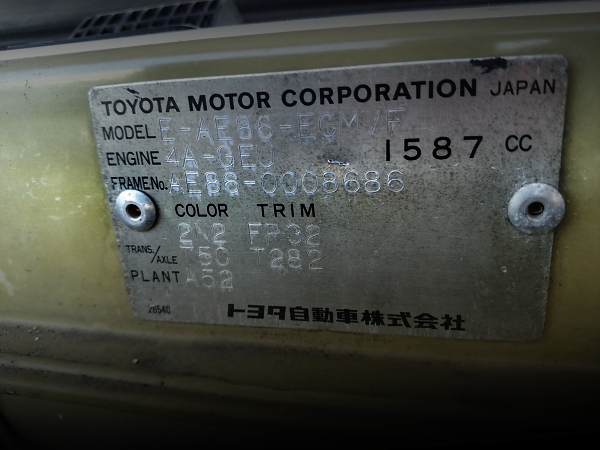
Naturally the best serialnumber on an AE86 would be AE86-0000086. Probably these low numbers used to be press cars and other promotional cars, so not much chance of finding these. However, the next best number would be AE86-0008686! And guess what, someone found it for sale eight years ago!
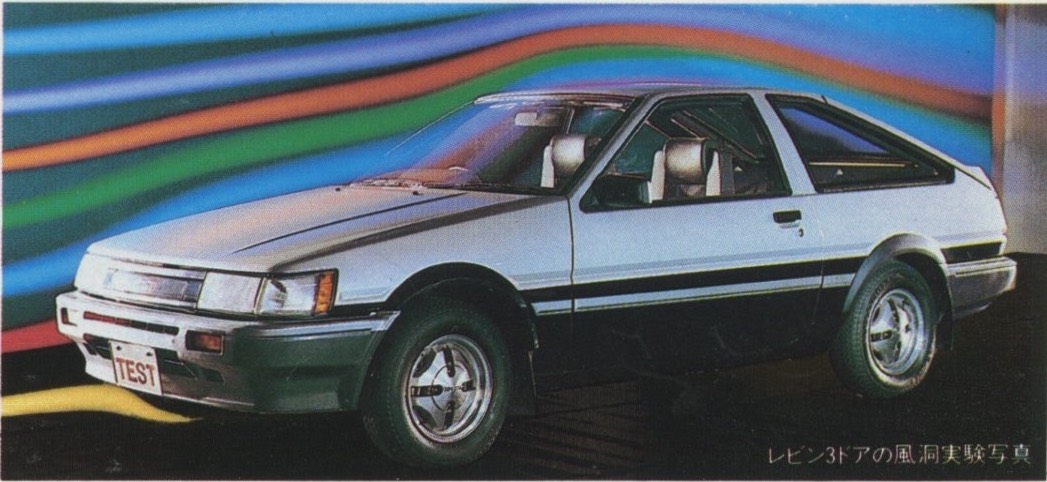
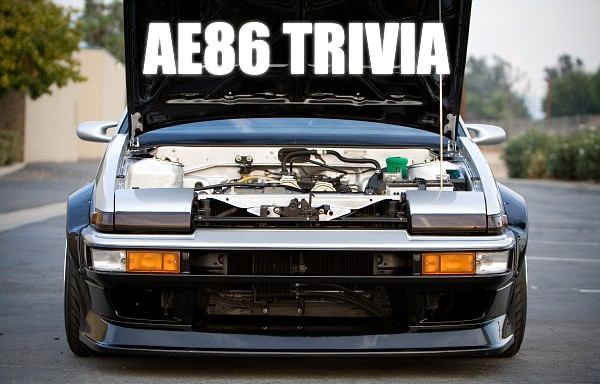
With the arrival of the fifth Corolla and Sprinter, the Levin and Trueno AE86 featured two distinct body styles: a sporty looking two-door and a slippery looking three-door. This was different compared to the previous generations. In the fourth generation the Levin and Trueno were only a (top of the line) trim level on the three-door. The new Levin and Trueno had a very different appearance where the Levin retained fixed headlights and the Trueno gained popup headlights. I wondered how this would influence the drag-coefficient of both models and both body types. Time for another AE86 Trivia post!
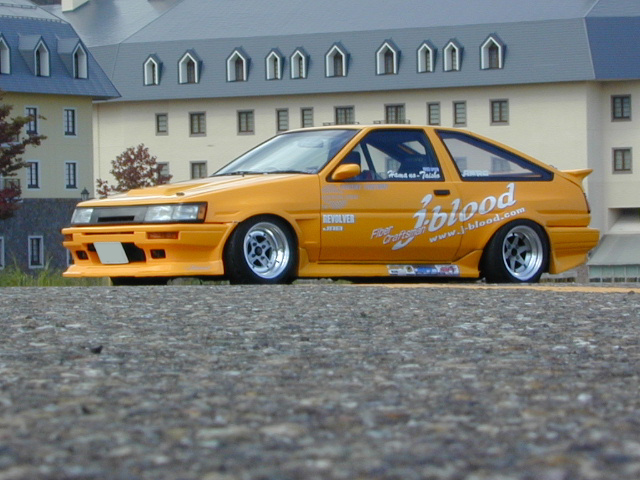
With it’s 1980s sharp lines the AE86 already is a good looking car from the factory. Some people like to go one step further and dress it up with a Run Free or J-Blood body kit. You can even compliment that with a TRD ducktail spoiler. These body kits and spoilers are an evolution of the optional factory AE86 Sports Package.
Toyota AE86 J-blood body kit
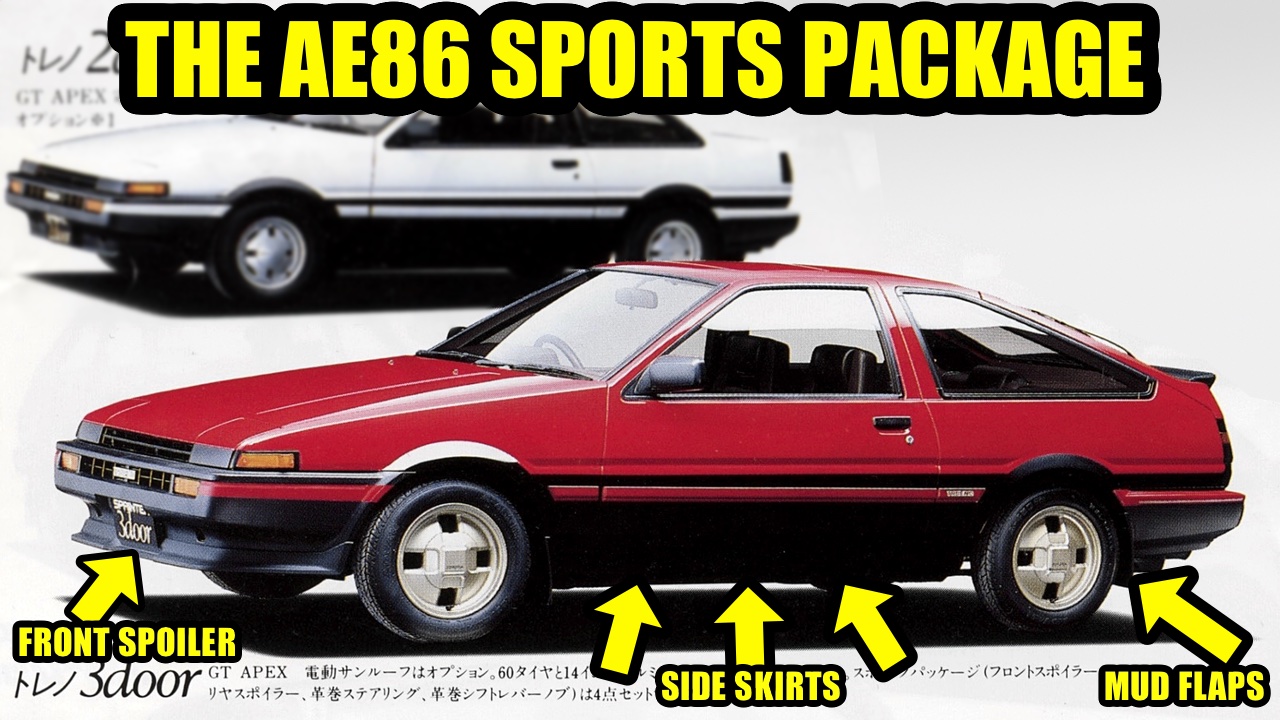
This package changed over the years many times, but mainly consisted of a set of spoilers and side skirts.
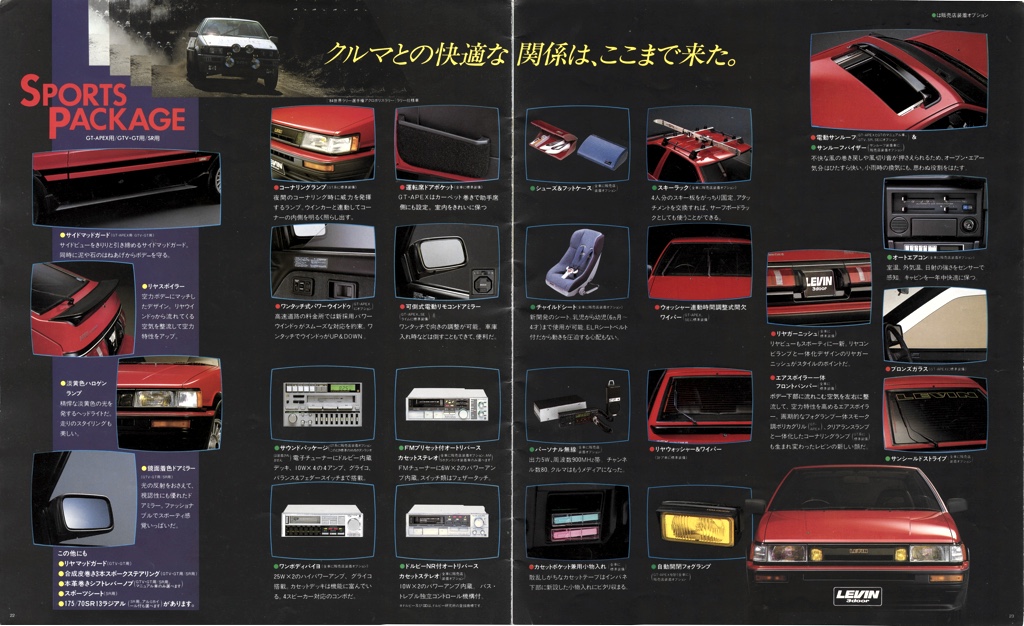
The Levin AE86 Sports Package
So what was this package? When did it become available? How did it change over time? What did it cost? Why wasn’t it available outside Japan? And why are these parts still sought after today and fetch insane prices? I recently made a video about the AE86 Sports Package and this blog post is basically the script I wrote to create this video. Join me down the AE86 rabbit hole and learn everything about the factory Sports Package!
Pre-facelift AE86 Sports Package in Japan
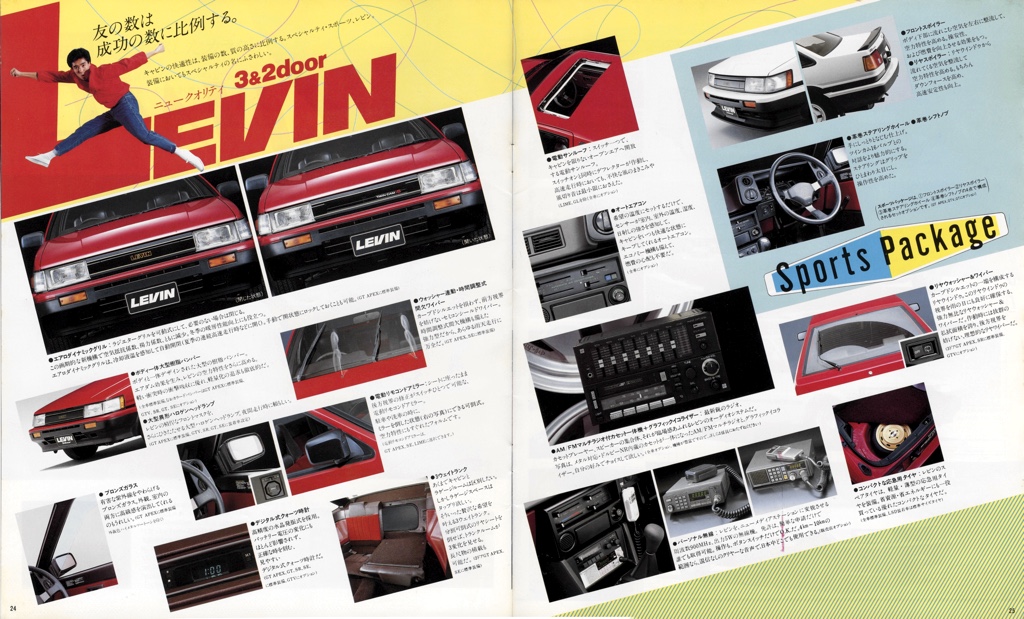
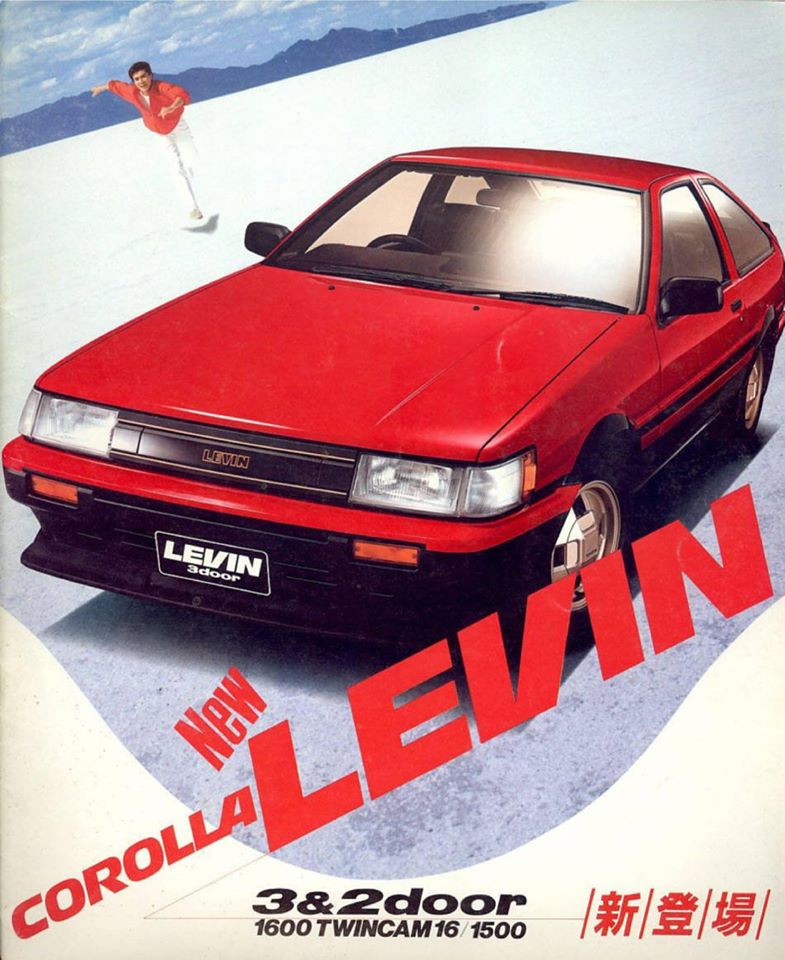
When both the Levin and Trueno AE86 were introduced in 1983, there was no Sports Package available. There wasn’t even a single spoiler included in the dealer accessories. In the Levin and Trueno brochures at launch both lacked the Sports Package that was present in later brochures. The Sports Package only became available in August/September 1983 and that’s when the brochure was adjusted. At first the Levin and Trueno brochures received only a subtle update and those changes were hardly noticeable. But place them side by side and you will notice they actually have changed a lot: the Levin got gold striping on the grille, the door mirrors are more streamlined, the alloy wheels changed and yes there are front and rear spoilers! And the same applies to the Trueno brochure.
Toyota Corolla Levin AE86 brochure
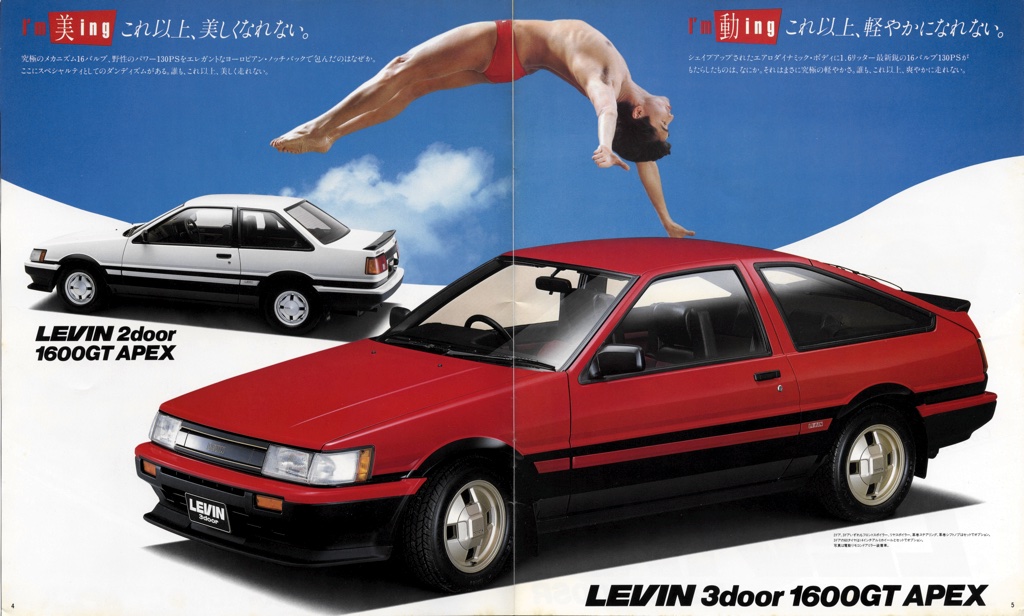
In August 1984 the Levin brochure received a second revamp and was dressed up more seriously like the Trueno brochure with Hirumi Go doing workouts. For as much you can call doing workouts being more serious than jumping into a pool.
Hirumi Go jumping into the AE86 pool!
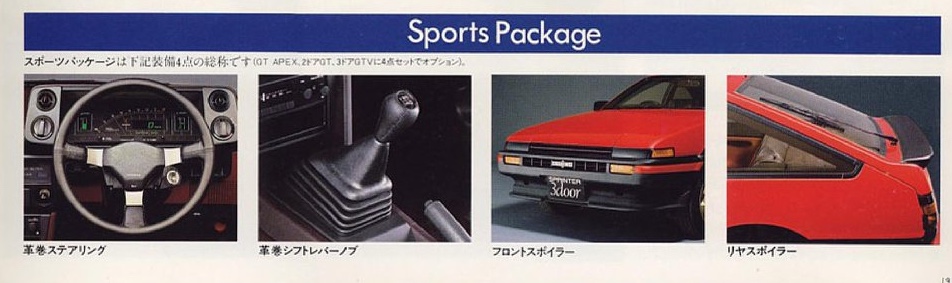
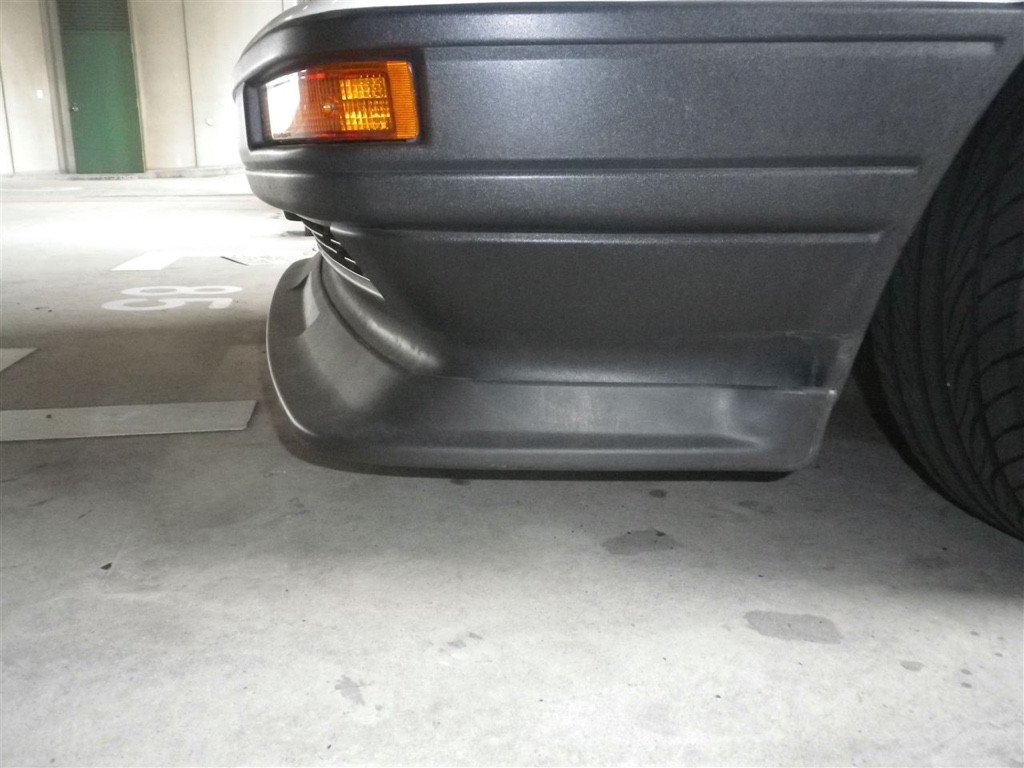
The Sports Package was initially only available on the GT Apex, 3 door GT-V and 2 door GT trim levels. It featured an artificial leather steering wheel, genuine leather wrapped gear shift knob and a front and rear spoiler. The front spoiler actually is an air dam, front lip or front splitter, but we’ll call it a spoiler as that’s how almost all Toyota brochures call it. The rear spoiler adds weight, so stiffer springs and dampers were installed on the hatch or bootlid on the models with these.
The first version of the pre-facelift / zenki AE86 sports package
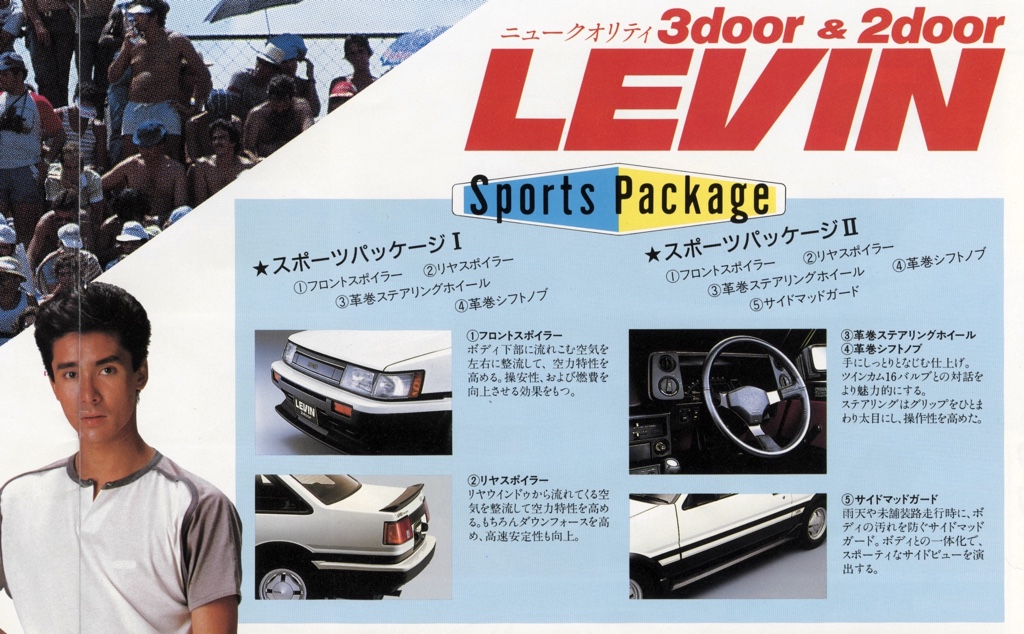
Shortly after the sports package became available, a set of the famous side skirts were added to the package. As the side skirts are mounted over the inner fenders, the front mud flaps won’t fit anymore. This is why cars with the Sports Package only have rear mud flaps.
The revised version of the pre-facelift / zenki AE86 sports package
Facelifted AE86 Sports Package in Japan
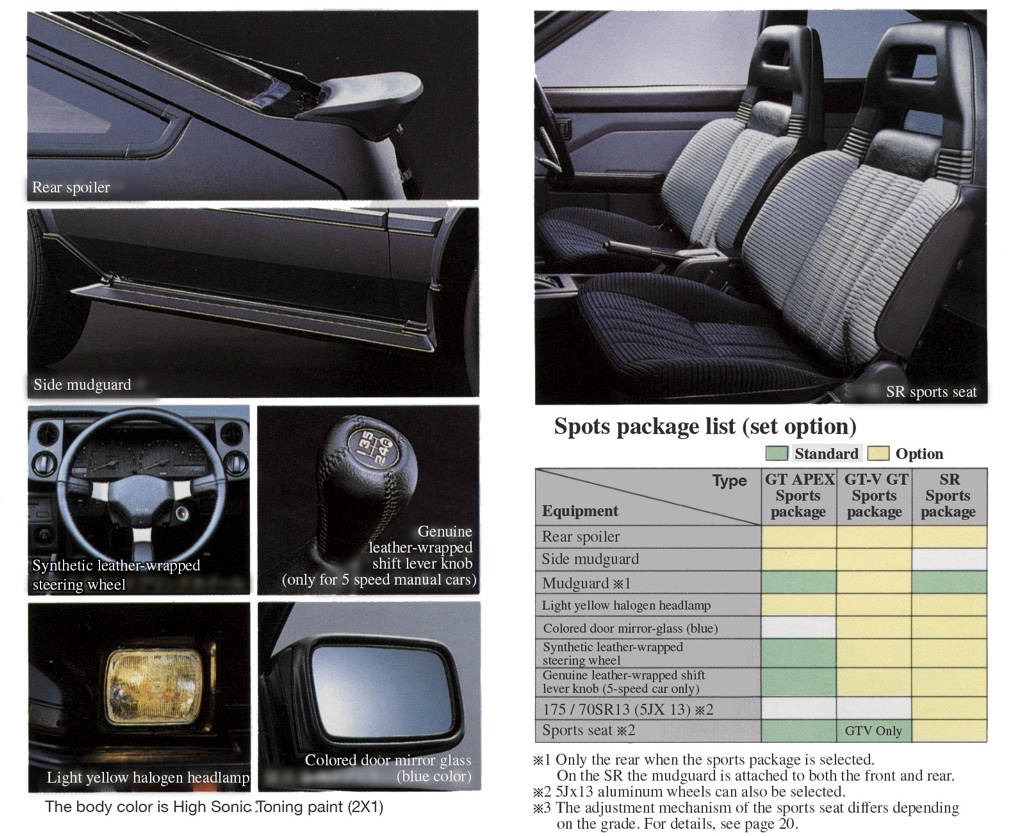
After the facelift in May 1985 the new front bumper received an integrated air dam, so the separate front spoiler is no longer offered. New options in the package were blue colored door mirror glass and yellow halogen headlamps. The Sports Package was now extended to the SR trim level, and this meant new parts had to be added to the package. The mudflaps were previously standard on the GT Apex, SR and SE trim levels but now became optional for the GT-V and GT trim levels.
The facelifted AE86 sports package for the Toyota Sprinter Trueno
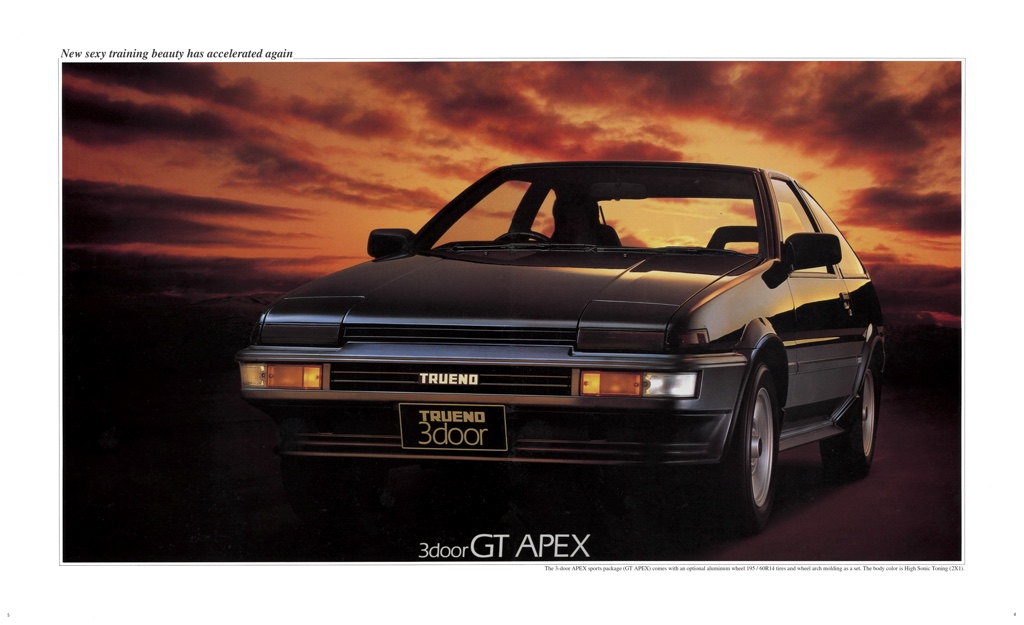
The GT Apex was already pretty much specc-ed out as it featured the mud flaps, artificial leather wrapped steering wheel, leather gear shift knob and velours sport seats by default. The pre-facelift package on the GT Apex already included a rear spoiler, side skirts, so the new package only added the yellow halogen headlamps.
The facelifted / kouki Toyota Sprinter Trueno AE86 GT Apex
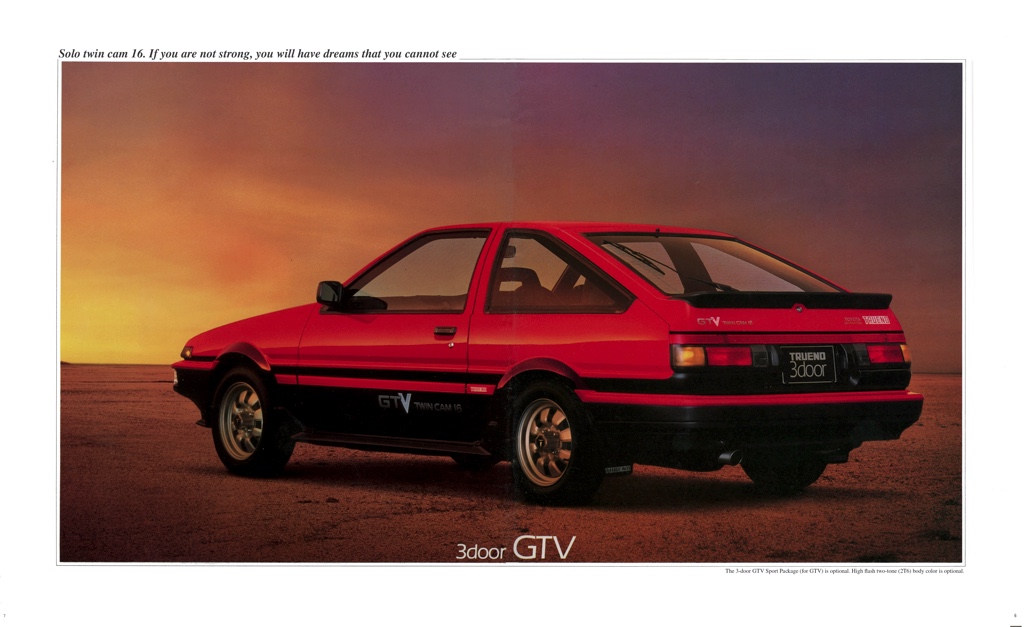
The GT and GT-V trim levels were more basic, for instance by default only the GT-V featured the sports seats. The pre-facelift already featured the side skirts, artificial leather wrapped steering wheel, leather gear shift knob and a set of mud flaps. The new package added yellow halogen headlamps and blue colored door mirror glass to the mix.
The facelifted / kouki Toyota Sprinter Trueno AE86 GT Apex
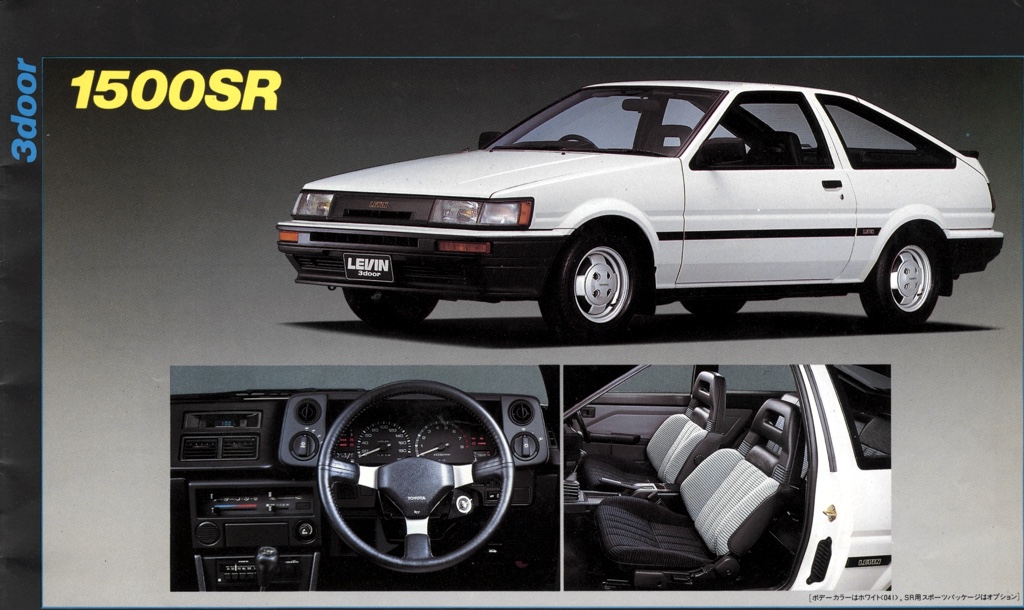
The SR trim level by itself lacked almost all luxury. The new SR Sports Package added the rear spoiler, mud flaps, yellow halogen headlamps, blue colored door mirror glass, artificial leather wrapped steering wheel, genuine leather wrapped gear shift knob, alloy wheels and the same sports seats as found in the GT-V could be added. If you paid close attention you would have noticed the side skirts were not available on the SR trim level. This also meant the SR Sports Package featured mud flaps both front and rear, while the others didn’t.
The facelifted / kouki Toyota Levin AE85 SR with the Sports Package
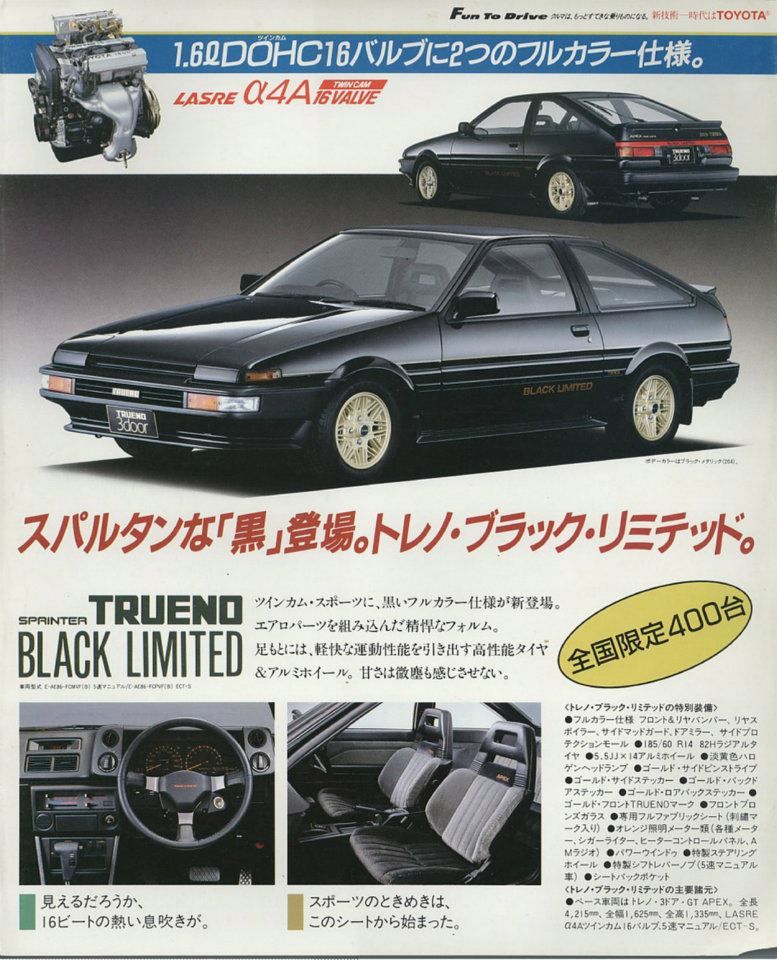
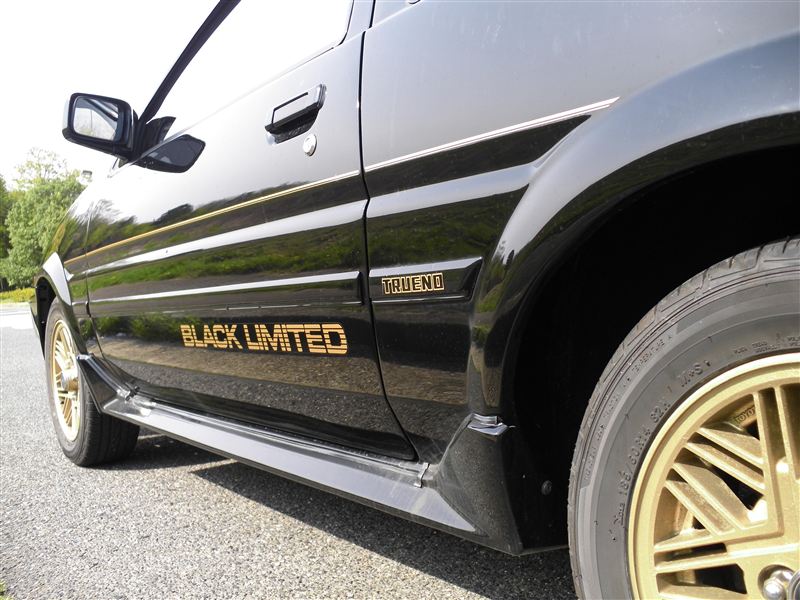
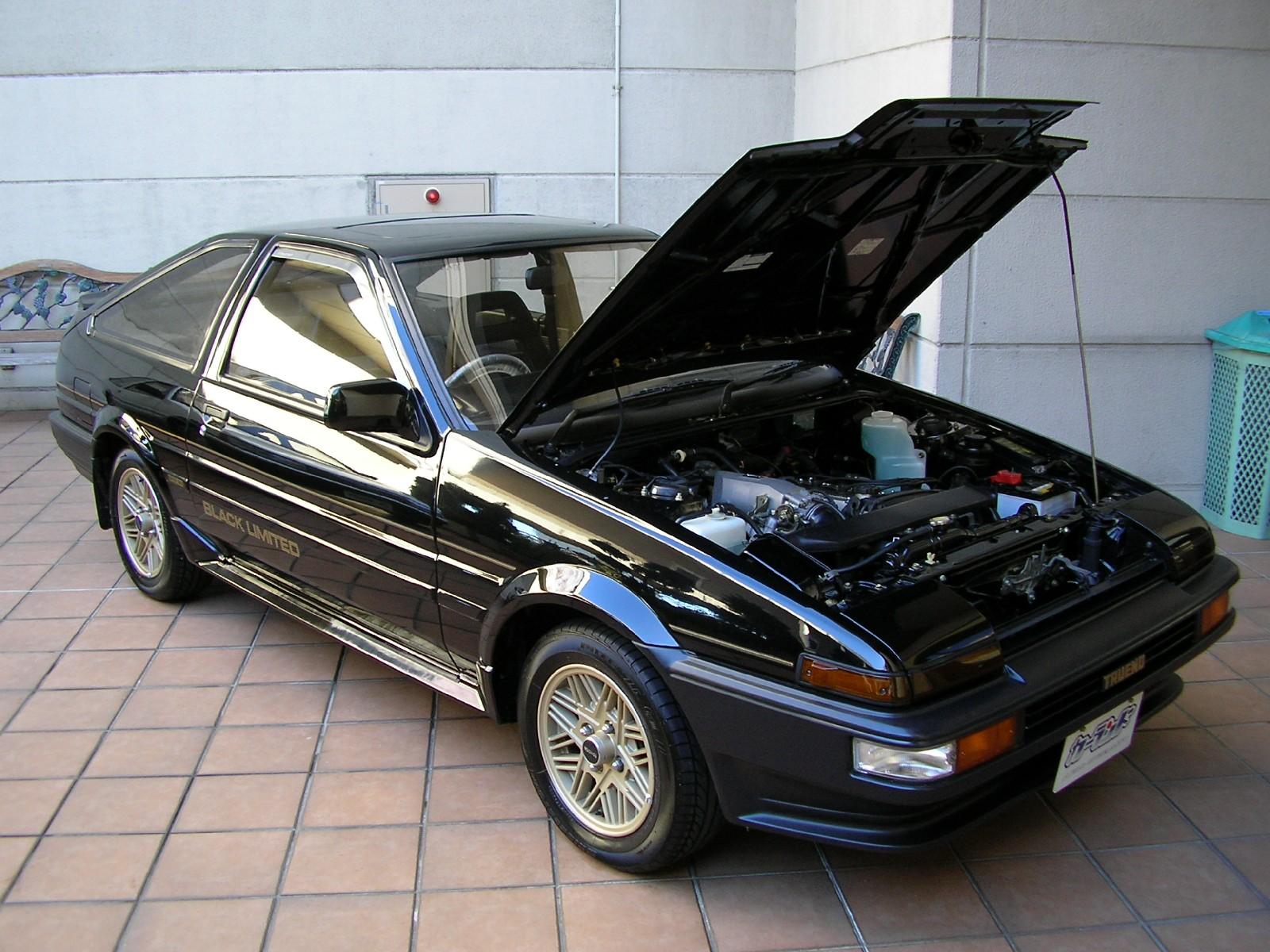
There is one more honorable mention here: the Toyota Sprinter Trueno Black Limited featured the Sports Package by default. Yes the Black Limited really was the ultimate trim level and no option was spared! Apart from the Black Limited gold and amber theme, there was no significant difference between the GT Apex Sports Package and the Black Limited Sports Package.
The Toyota Sprinter Trueno AE86 Black Limited featured the Sports Package by default
The AE86 Sports Package outside Japan
Now you may wonder if there were any Sports Packages available outside Japan. The short answer is no: there were no Sports Packages available outside Japan. At least, not if you ignore the aftermarket German Haslbeck trim that became a dealer option in Germany. However the long answer is that some parts of the Sports Package were made available as standard items or as optional upgrades.
USA and Canada
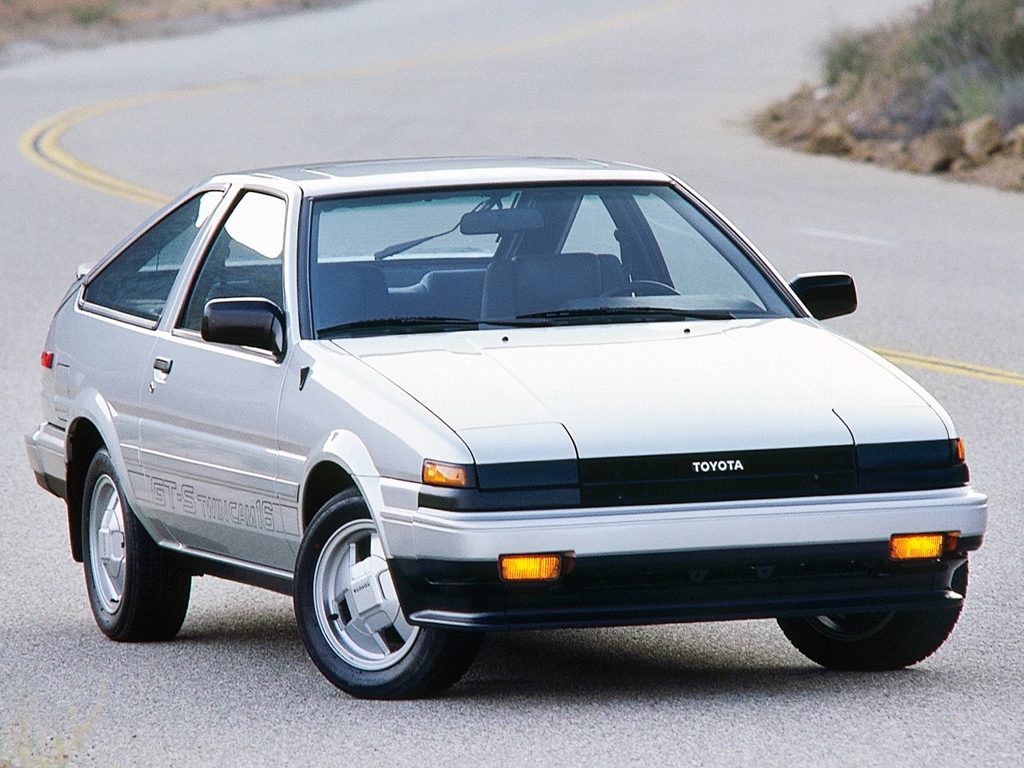
The USDM and Canadian AE86 featured various options. The mud flaps were already standard on the GT-S trim level and available as an option on the SR5 trim level. The pre-facelift GT-S featured a front spoiler standard and trunk spoiler as optional on the GT-S. This front spoiler isn’t the same as the Japanese though: it’s not a separate part but actually an integral part of the entire front bumper assembly.
The USDM / Canadian Toyota Corolla GT-S with integral front spoiler assembly
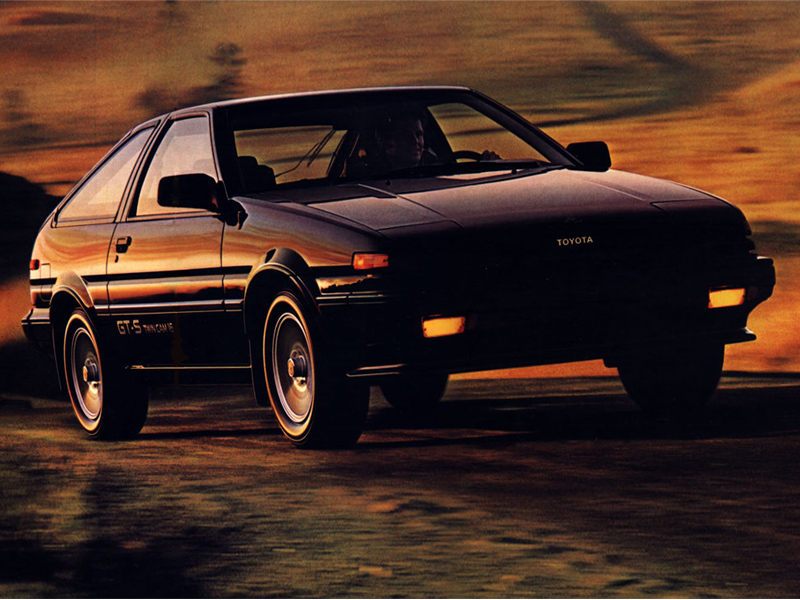
With the facelift kicking in only months after the launch, the front spoiler remained standard on the GT-S. Strangely enough the facelifted GT-S lacked the rear spoiler as an option, and it doesn’t appear to be present in the press photos and brochures.
Funnily enough the facelifted USDM / Canadian Corolla GT-S didn’t feature the rear spoiler
Australia
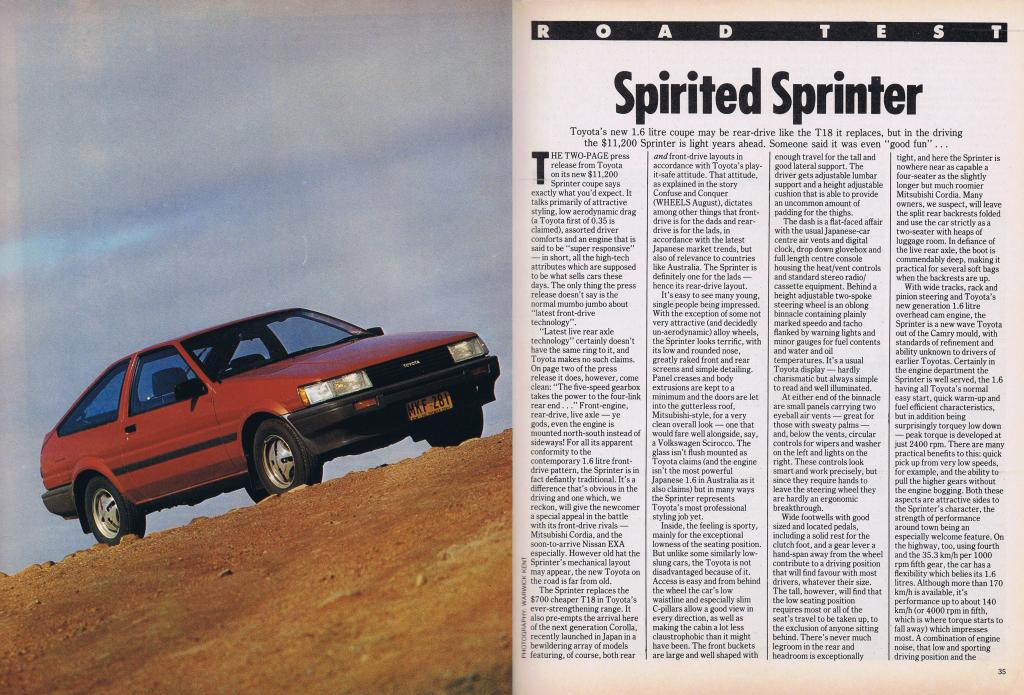
The Australian Corolla Sprinter can best be described as the SR5 from the US and Canada with a Levin body. Australia was one of the first countries to sell the AE86 right from the launch in May 1983. Unfortunately this also meant their Sprinter AE86 didn’t get any of the items in the Sports Package with the first batch. The Sprinter was for sale till August 1985 and there are no records that indicate spoilers or side skirts were added after August 1983.
The Australian Toyota Corolla Sprinter AE86 didn’t get any Sports Package parts
Europe
The countries that sold the eight-six in no particular order are: UK, Ireland, France, Portugal, Greece, Denmark, The Netherlands, Belgium, Finland, Germany, Austria, Switzerland and the Canary Islands. As the European countries imported their AE86-es separately there were a couple of differences. I’ll name these separately, so right here I’ll discuss what they all had in common.
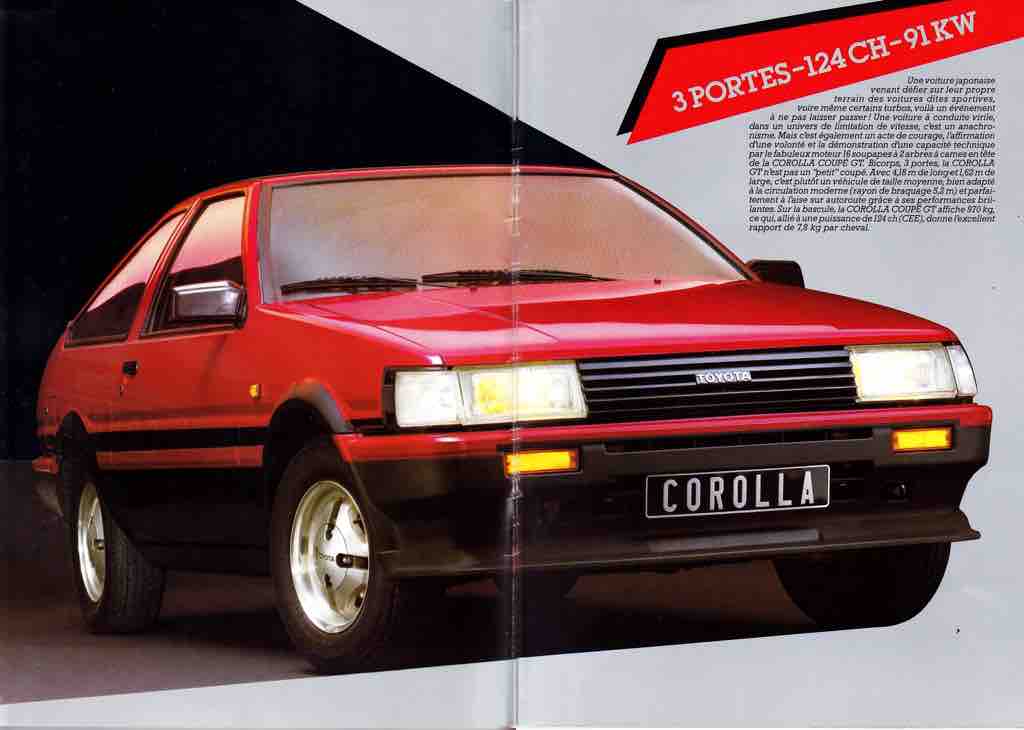
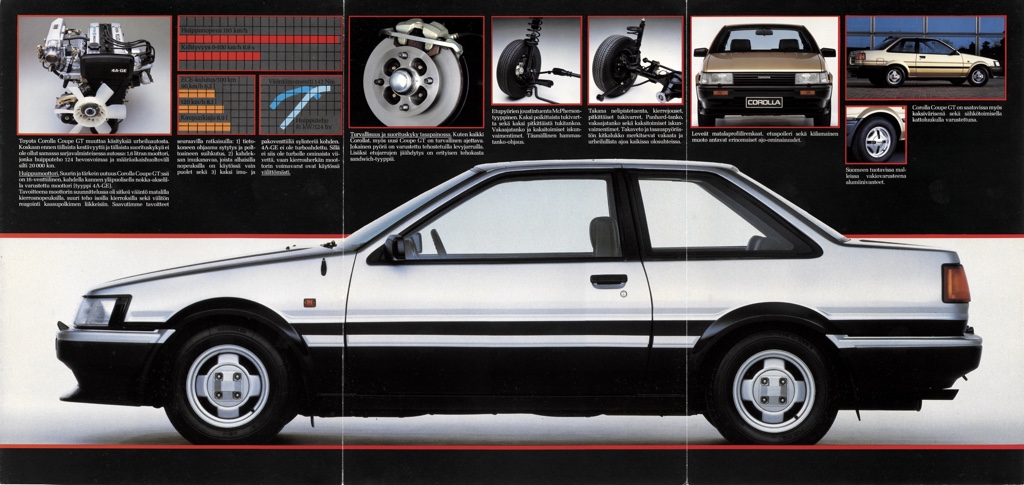
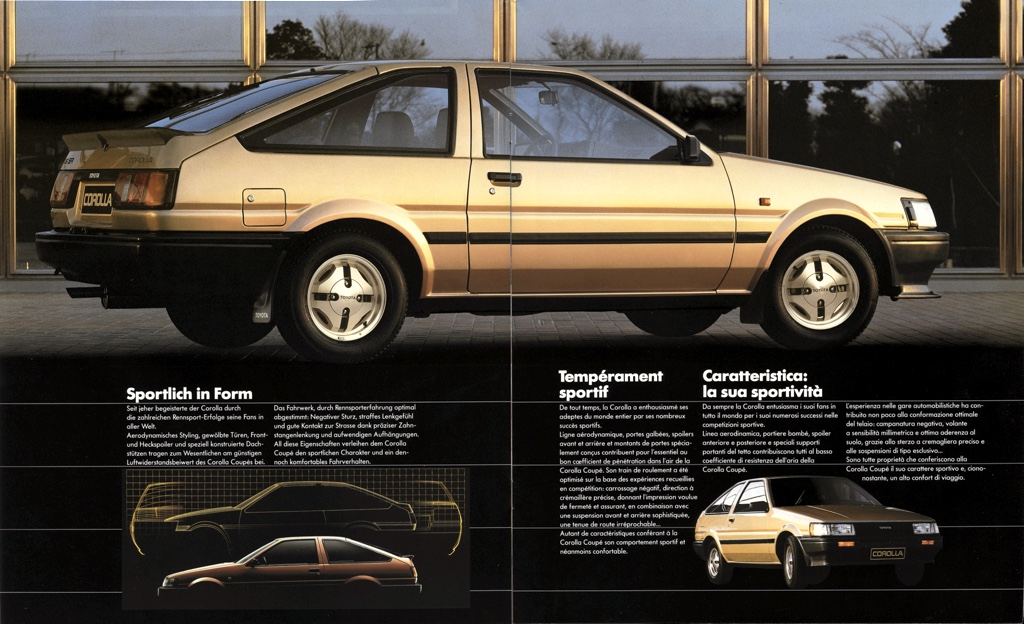
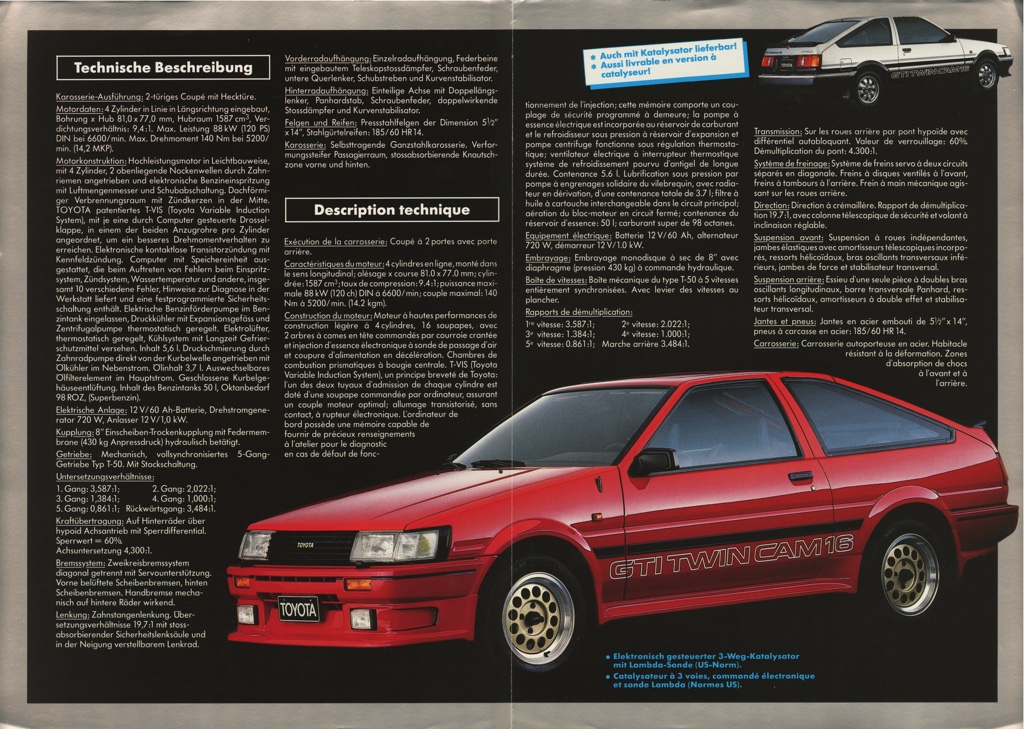
In general most of the European countries started selling the Corolla GT or GTi Coupé after August 1983 and thus got the front and rear spoiler included in the package. These two spoilers are the exact same as the ones available for the Japanese Levin. I have seen a few European pre-facelift panda eight-sixes with sideskirts, but there is no documentation to back that the pre-facelift models received side skirts. In some countries mudflaps were available as standard or option.
The European pre-facelift / zenki Toyota Corolla AE86 didn’t get any side skirts
After the facelift arrived in August 1985, the side skirts got included in some countries but not all of them. What’s also new is the inclusion of a separate front spoiler that differs from the pre-facelift front spoiler. This front spoiler is unique to Europe and wasn’t available in Japan.
The European facelifted / kouki Toyota Corolla AE86 did get side skirts and a front and boot spoiler
Germany
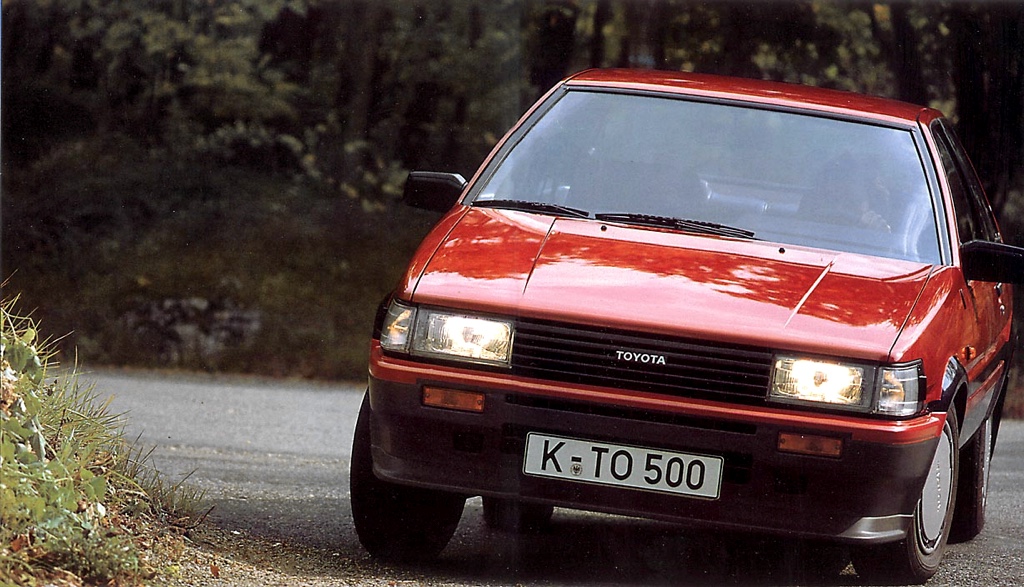
In Germany the two door Corolla GT was launched in November 1983 and was sold similar to the two door Japanese GT Apex but only included the front spoiler. Maybe this was done to increase sales on the Haslbeck trim that was sold as a dealer option. This trim included a different front and rear spoiler and also different side skirts.
The German pre-facelift / zenki Toyota Corolla AE86 only got a front spoiler and mud flaps
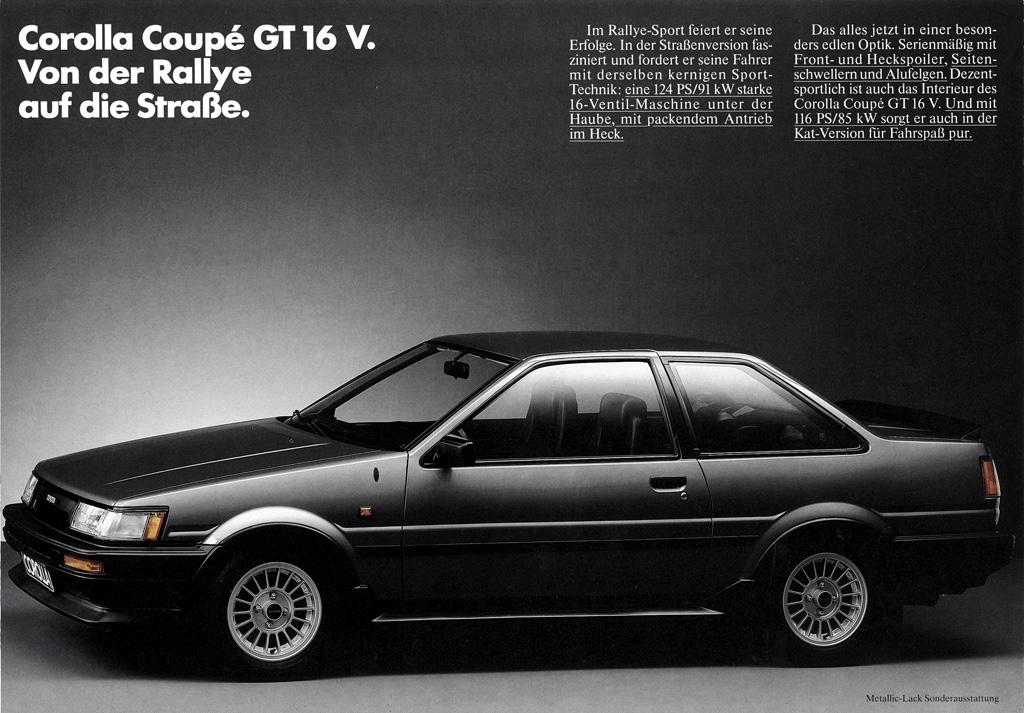
Only after the facelift Toyota Germany added the rear spoiler and side skirts to the standard trim and the new front spoiler was included as well.
The German facelifted / kouki Toyota Corolla AE86 got a front spoiler, side skirts and bootlid spoiler
The Netherlands, Belgium and Finland
At the launch in June 1983 in The Netherlands, Belgium and Finland there was no front spoiler. Somewhere in July or August the front spoiler was added to the standard trim, but already some dealers stocked up cars without a front spoiler. Just like in Germany, the rear spoiler was missing on these two door models.
The Finnish pre-facelift / zenki Toyota Corolla AE86 only got a front spoiler and mud flaps
After the facelift also the rear spoiler, sideskirts and the separate front lip were included.
Switzerland
Switzerland is another special case. From August 1983 onwards the Corolla SR coupé was sold. This coupé was equal to the Australian Sprinter SR, with the difference that it also included the Sports Package front and rear spoiler.
The Swiss pre-facelift Toyota Corolla SR AE86 did get a set of spoilers
In February 1985 the Corolla SR coupé was replaced by the pre-facelift Corolla Coupé GTi and it included the front spoiler and rear spoiler. The Haslbeck trim was optional and included side skirts.
The Swiss pre-facelift Toyota Corolla GTi AE86 got spoilers and a Haslbeck trim
The facelifted GTi arrived during the summer 1985 and only included the Sports Package rear spoiler and the new European front spoiler.
Other countries
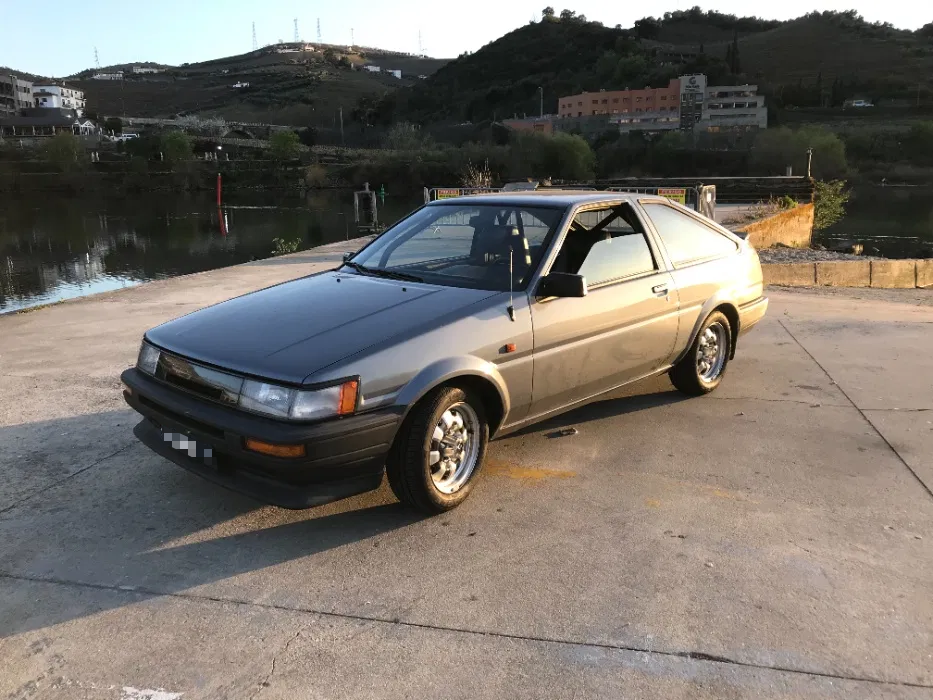
The three door AE86 was also sold in the Canary Islands, Sweden, Denmark, Portugal and Greece. I have no documentation from these countries, so it’s impossible to say for certain if these countries also included the same front spoiler, rear spoiler or side skirts from the Sports Package. I did find photos of Portugese cars including the new front lip, so my best guess is that they did.
A Portuguese facelifted Corolla GT AE86 with the European front spoiler
It’s also difficult to tell what items featured on the cars that were sold in other countries as those were all really low volume sales.
Conclusion
The infamous Japanese Sports Package really was a strange option to begin with: you had to order it before the manufacturing of your AE86 began. Just like the type of alloy wheels, sunroof or power windows. In Japan there were also dealer-installed options like aircon, cassette radios, child seats and sunroof wind deflectors. It’s unknown why the Sports Package wasn’t just part of the dealer options and accessories to begin with.
These are the Japanese dealer options. There was also a separate accessories brochure!
Some of the parts in the Sports Package are still sought after today. Many of the original parts have been replaced by aftermarket body kits or were damaged beyond repair. Finding original undamaged side skirts is quite challenging. Also some countries like the USA and Canada didn’t get these parts, so they tend to import them in large numbers which drives up the prices in Japan. Finally the pre-facelift front lip of the Levin and Trueno are being used on post-facelift models to give it a more pronounced lip. This means these lips are getting scarce and that also increases prices. Luckily many aftermarket bumpers, like the J-Blood Front Spoiler Type-2 includes this lip.
Zenki AE86 front spoiler on a kouki AE86 front bumper? Hell yeah!
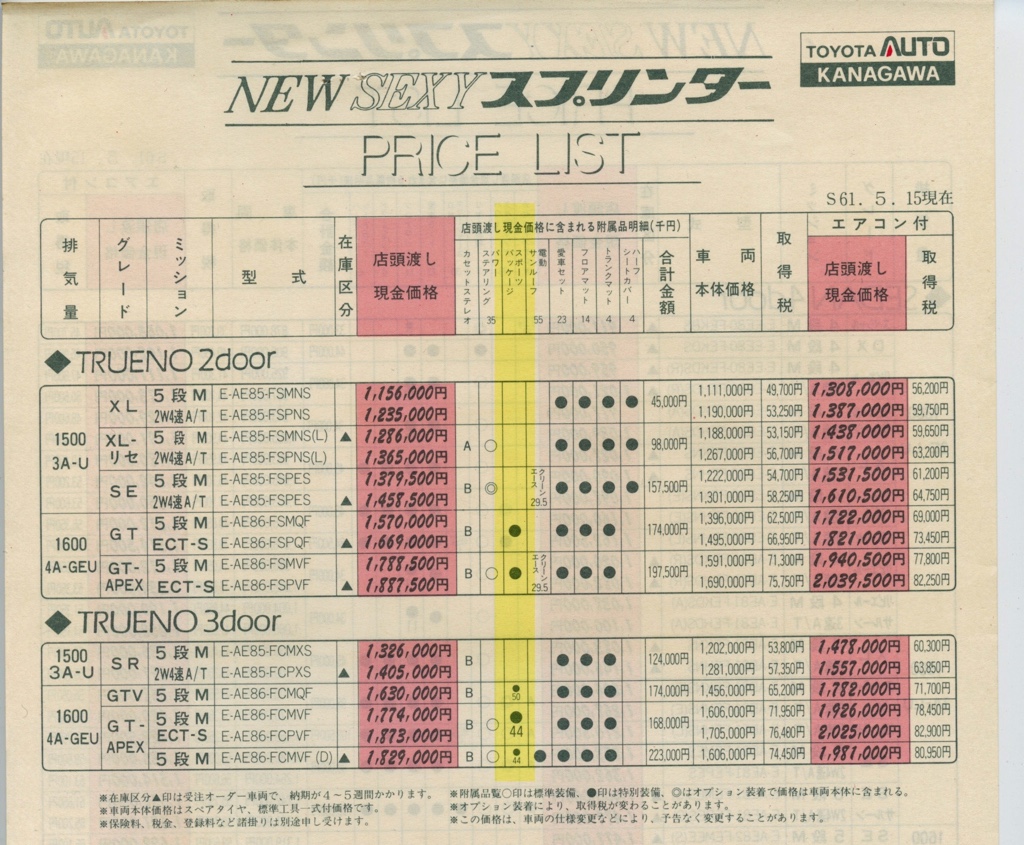
Now the big question you have right now is how much the Sports Package would have cost you when you bought your AE86 new. I have found a lot of Japanese pricelists online and own four myself. Out of all these price lists I could only find two that mentioned the Sports Package as an option. In both cases the Sports Package was an option that was already included in the salesprice of the car. Does this mean it was free of charge? The strange thing is that this also implies some owners actually choose not to install the Sports Package!
1986 Toyota Sprinter pricelist: the sports package is part of the final price!
It is time to dig a bit deeper into the AE86 again and this time I had a specific model in mind: the Toyota Sprinter Trueno AE86 Black Limited!
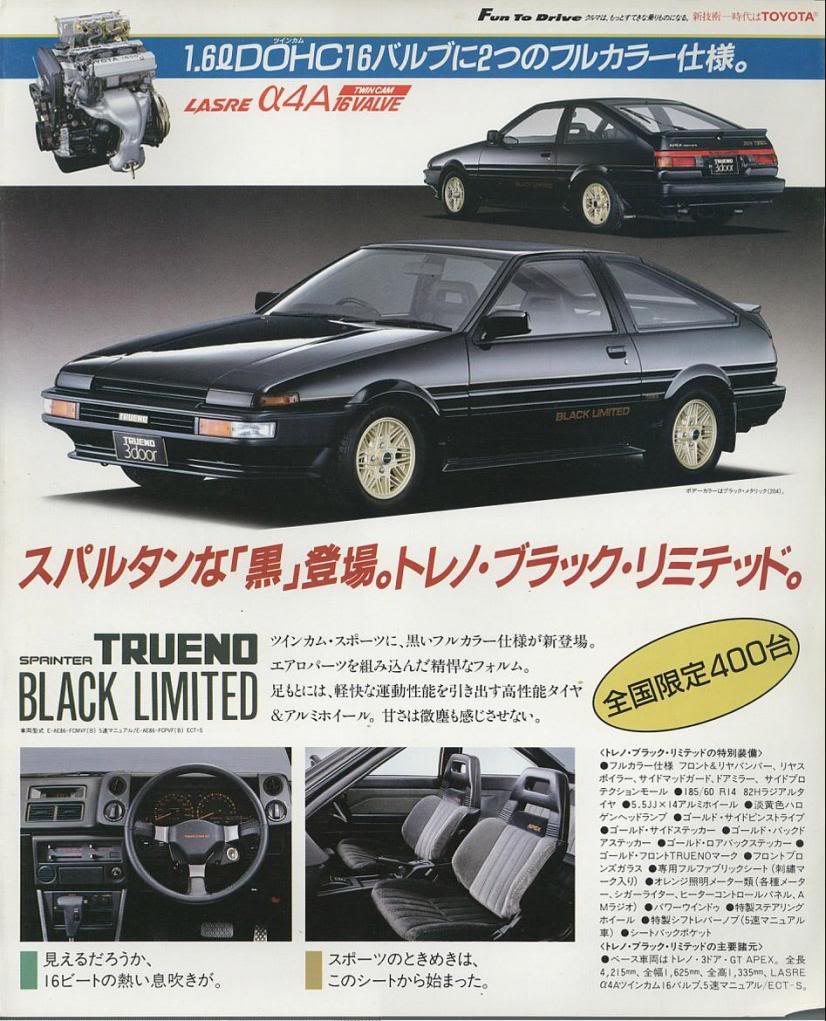
A total of 400 Black Limited AE86 were made in 1986 and all of them are Sprinter Truenos. So no Levins were available in the Black Limited edition! All Black Limited cars were graded as GT Apex.
This is the official brochure from 1986:
Fast forward 27 years and this is how some examples by Carland AE86 look today:
What are the key differences between the normal kouki Toyota Sprinter Trueno AE86 and the Black Limited?
Black (duh!) paint in colorcode (204) that was not available on the normal lineup.
Gold painted 5.5JJ x 14 inch rims (aka Snowflakes)
Kouki tail lights with a Black Limited mid section
Black Limited gold livery on the doors with a gold pinstripe
Golden Trueno grille logo
Black/grey/orange gauge cluster
Black/grey/orange leather GT steering wheel
Black/grey/orange leather gearshifter knob
Black/grey/orange interior
A very good example of the Black Limited orange livery: Continue reading
Earlier I featured the AE86 GT-Apex Digi Dash and obviously, it raises many AE86 enthusiasts’ hearts. This time I’d like to feature the normal analogue AE86 gauge cluster versus the AE85 gauge cluster. In case you feel you have a deja vu by now: you are completely right about that! I did post the AE86 gauge clusters earlier but reposted it once again with additional information.
AE86 gauge clusters
If you ever owned an AE86 (or watched too much Initial D) these clusters should be quite familiar. There are two types of clusters for the AE86: left-hand drive (LHD) and right-hand drive (RHD). The layout of these clusters has been mirrored: on the LHD the tachometer is on the left side of the cluster, while on the RHD that spot is taken by the speedometer. Also, the warning lights, fuel, water temperature and oil pressure gauges all have been mirrored.
JDM AE86 gauge clusters
the GT Apex cluster and the GT / GT-V cluster. They appear to be identical, however, they do have subtle differences.
The zenki (early) AE86 GT Apex gauge cluster features the speedometer on the left and the tachometer on the right. As the Japanese government mandated speedometers to be limited to 180 km/h since the 1970s, the speedometer has a different scale than all export models. The gauge cluster features a fuel meter on next to the speedometer and oil pressure and water temperature gauges next to the tachometer. On the left and right we also find several warning lights, but I’ll get into that later. In the middle between the speedometer and tachometer, we find the two indicator lamps. Below the tachometer, we find the high-beam indicator light.
On the speedometer and tachometer scales we see intermediate steps about 2/3rds width of the full steps. Also the speedometer features the scale in yellow/orange on speeds above 100 km/h.
This website uses cookies to improve your experience. We'll assume you're ok with this, but you can opt-out if you wish.AcceptRead More
Privacy & Cookies Policy
Privacy Overview
This website uses cookies to improve your experience while you navigate through the website. Out of these, the cookies that are categorized as necessary are stored on your browser as they are essential for the working of basic functionalities of the website. We also use third-party cookies that help us analyze and understand how you use this website. These cookies will be stored in your browser only with your consent. You also have the option to opt-out of these cookies. But opting out of some of these cookies may affect your browsing experience.
Necessary cookies are absolutely essential for the website to function properly. This category only includes cookies that ensures basic functionalities and security features of the website. These cookies do not store any personal information.
Any cookies that may not be particularly necessary for the website to function and is used specifically to collect user personal data via analytics, ads, other embedded contents are termed as non-necessary cookies. It is mandatory to procure user consent prior to running these cookies on your website.